

















1
Light tells the brain what time it is
Daylight is one of the strongest cues for resetting the body clock. Poorly timed light, late-night screens or sleeping through local daylight can make adjustment slower.
Explore common health concerns and discover practitioner-grade nutritional support tailored to help restore balance and support your overall wellbeing.
Health concerns rarely arrive in neat little boxes. If more than one area feels relevant, begin with the pattern affecting daily life the most — energy, sleep, digestion, mood, immunity, or hormonal balance.
Persistent, worsening, unexplained, or sudden symptoms should be discussed with a qualified health professional, especially when medication, pregnancy, breastfeeding, or existing health conditions are involved.
For customers who value better guidance, clearer choices, and a more thoughtful way to shop practitioner-grade wellness.

●Article Guide
●Key Takeaways
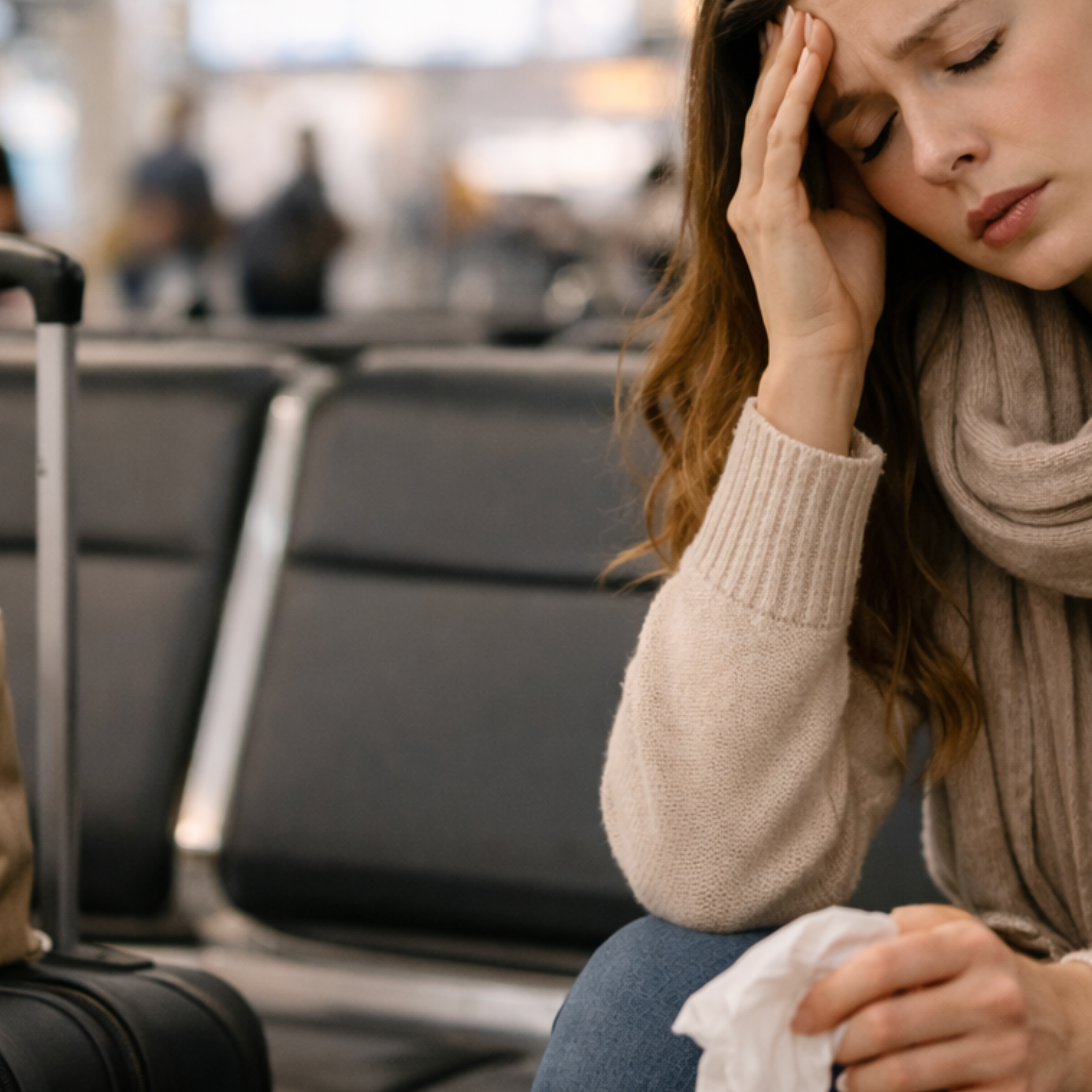
Jet lag is not just feeling tired after a long flight. It happens when the body’s internal timing system is out of step with the local day, leaving sleep, energy, appetite, digestion and mood trying to catch up.
The most useful approach is not to fight the body with force. Jet lag support works better when the main body-clock signals line up: light exposure, sleep timing, meal timing, hydration, movement and a calmer wind-down routine.
This GhamaHealth guide takes a practical travel-recovery approach. It focuses on what can be planned before travel, what matters during the flight, what to do after landing, and where supplements may fit without becoming the whole solution.
Body Clock Signals
The body runs on a circadian rhythm, which helps coordinate sleep, alertness, digestion, hormone signalling and body temperature across a 24-hour pattern. Long-haul travel can shift the outside clock faster than the body can naturally adjust.
Daylight is one of the strongest cues for resetting the body clock. Poorly timed light, late-night screens or sleeping through local daylight can make adjustment slower.
Sleeping on the plane may help if it matches the destination night. Sleeping heavily at the wrong time can leave the body more confused after landing.
Eating and moving in line with local time can support adjustment, especially when travel disrupts digestion, appetite and energy.
Before the Flight
A few small changes before travel can make the first few days away feel less chaotic. The aim is not to perfectly live in the destination time zone before departure, but to give the body fewer sharp changes at once.
If travelling east, gradually moving bedtime earlier may help. If travelling west, gradually moving bedtime later may be easier. Even a small shift can soften the change.
Plan when to seek light and when to dim light based on arrival time. Morning daylight after landing is often helpful when adjusting to the local day.
Begin the trip well hydrated. Cabin air, alcohol, caffeine and long periods of sitting can all make travel fatigue feel worse.
Avoid turning the departure day into a random snack marathon. Eating lighter, familiar meals can be easier on digestion before a long flight.
If possible, avoid booking the most demanding commitments straight after arrival. Jet lag is temporary, but the body still needs time to recalibrate.
During the Flight
The flight is where many jet lag plans fall apart. The goal is simple: follow the destination clock where practical, protect sleep quality when sleep makes sense, and avoid habits that make the body work harder after landing.
Long flights are already stressful on the body. Dehydration, alcohol, late caffeine, heavy meals and poor movement can all add extra load before the body reaches the new time zone.
Using the destination clock early can help guide when to rest, eat, dim light or stay gently alert.
Eye masks, earplugs and a calm cabin routine may help, but timing matters more than forcing sleep at any cost.
Water and electrolytes may support hydration during long travel, especially when cabin air is dry or meals are salty.
Short walks, ankle circles and light stretching can support comfort during long sitting periods.
Caffeine may help alertness during the local day, but late or excessive caffeine can make destination-night sleep harder.
After Landing
After landing, the body needs clear cues: light during the local day, darkness at night, meals at local times, gentle movement and short naps only when needed.
Natural daylight helps tell the brain the local day has started. A walk outdoors is often more useful than collapsing indoors under dim light.
Meal timing helps reinforce the new schedule. Keep early meals familiar and lighter if digestion feels unsettled.
Short naps may help when fatigue is heavy, but long daytime sleep can make the first destination night harder.
Lower light, reduce screens, avoid late caffeine and use a familiar wind-down routine to help the body recognise night.
Supplement Context
Supplements should not be positioned as a cure for jet lag. A better approach is to match support to the travel pattern: hydration, nervous-system wind-down, sleep timing, digestion and immune resilience. Suitability depends on the person, product, medicines, health conditions, pregnancy or breastfeeding status, and label directions.
Electrolytes and fluids
May support fluid balance during long flights, hot climates, heavy sweating or disrupted eating routines.
Check suitability with kidney disease, blood pressure concerns, sodium restriction or medication use.
Magnesium, theanine or calming herbs
May fit into an evening routine when the nervous system feels wired after travel.
Use caution with sedatives, pregnancy, breastfeeding, low blood pressure or sensitive digestion.
Melatonin discussion
May be discussed with a healthcare professional for short-term circadian timing support during time-zone travel.
Timing matters. It may not be suitable for everyone and should not be treated like a general nightly sleep habit.
Probiotics, enzymes or fibre context
May support travellers whose digestion becomes irregular with new food, altered meals or long sitting.
Use caution with immune compromise, severe digestive symptoms, unexplained changes or persistent diarrhoea.
What to Avoid
Jet lag advice often becomes too aggressive: force sleep, force wakefulness, use alcohol to relax, overuse caffeine, or take sleep products without thinking about timing. That approach can make the first few nights messier.
FAQs + Checklist
These questions cover jet lag, light exposure, sleep timing, caffeine, hydration, melatonin, digestion and practical travel-recovery routines.
Jet lag is a temporary disruption that can occur after rapid travel across time zones. The body’s internal clock remains partly aligned to the original time zone while the destination is running on a different schedule.
Eastward travel usually shortens the day, which can make it harder for the body to fall asleep earlier than usual. Westward travel often lengthens the day, which some people find easier to adapt to.
Light is one of the strongest signals for the circadian rhythm. Timed daylight exposure after arrival may help the body adjust to local time, while bright light at the wrong time can make sleep harder.
Caffeine does not need to be avoided by everyone, but timing matters. It may support alertness earlier in the local day, while late caffeine can interfere with destination-night sleep.
Melatonin may be discussed for short-term circadian timing support in some travellers. It is not suitable for everyone, and timing matters, so professional advice is sensible before use.
Related Products

For evening relaxation, muscle comfort and nervous-system support after long flights.

For immune support during airports, crowds, late nights and busy travel periods.

For hydration support during long flights, dry cabin air, heat or disrupted fluid intake.

For digestive rhythm and gut flora support when food, timing and routine change.
Conclusion
Jet lag is easier to understand when it is treated as a timing problem. The body is trying to match a new local day, while sleep, digestion, alertness and energy are still partly following the old clock.
The most useful support starts with clear cues: daylight at the right time, sleep at the right time, local meal timing, steady hydration, gentle movement and a calmer evening routine. Supplements may have a place, but they work best as part of a sensible travel-recovery plan, not as a shortcut around it.
GhamaHealth summary: reset the signals, protect sleep timing, hydrate well, use caffeine carefully, and give the body enough recovery room to catch up.
Related Reads
Important Information
This article provides general educational information only and does not replace personalised medical advice, diagnosis or treatment. Jet lag is usually temporary, but persistent sleep problems, severe fatigue, ongoing mood changes, significant digestive symptoms or symptoms that continue after travel should be discussed with a qualified healthcare professional.
Supplements, sleep-support products, melatonin, herbal products, electrolytes and digestive-support products may not be suitable for everyone, especially during pregnancy, breastfeeding, medication use, chronic illness, kidney disease, liver disease, autoimmune disease, epilepsy, complex sleep disorders, shift-work sleep problems or before surgery.
Always read the label and follow the directions for use. Speak with a qualified healthcare professional before using sleep-support products, melatonin or herbal formulas if you take medication, have a medical condition, are travelling with children, or are unsure whether a product is appropriate.
For our full Health Disclaimer & Liability Notice, please visit: Health Disclaimer.


OUR WAREHOUSE
26 Artisan Rd.
Seven Hills, NSW 2147
Tel: +61 2 9683 2598
Dispatch warehouse only — no public access or counter sales.
We acknowledge the Darug People of the Burramattagal as the Traditional Custodians of the land on which we work, live, and learn. We pay our respects to their Elders, past and present and extend that respect to Aboriginal and Torres Strait Islander peoples here today.


