













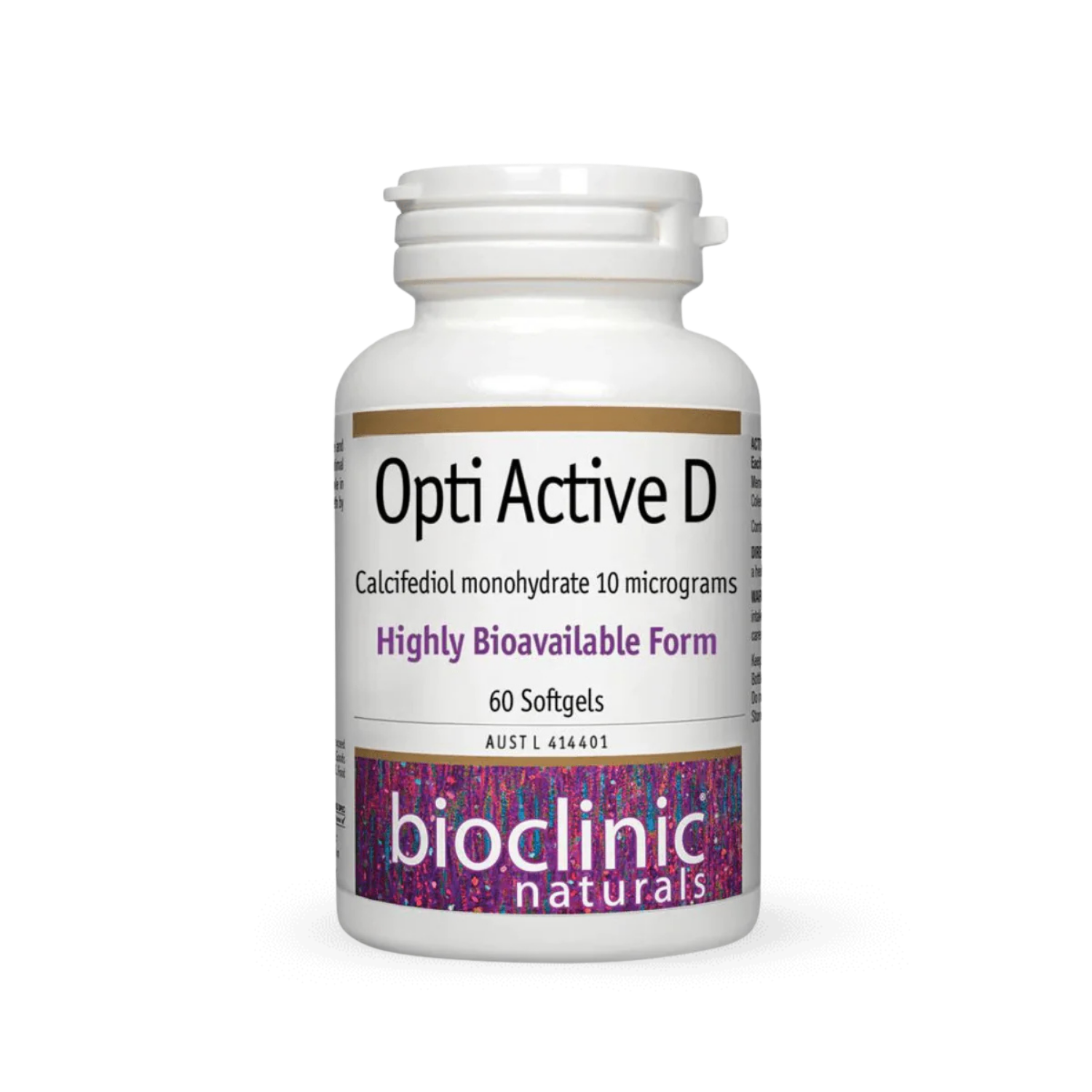
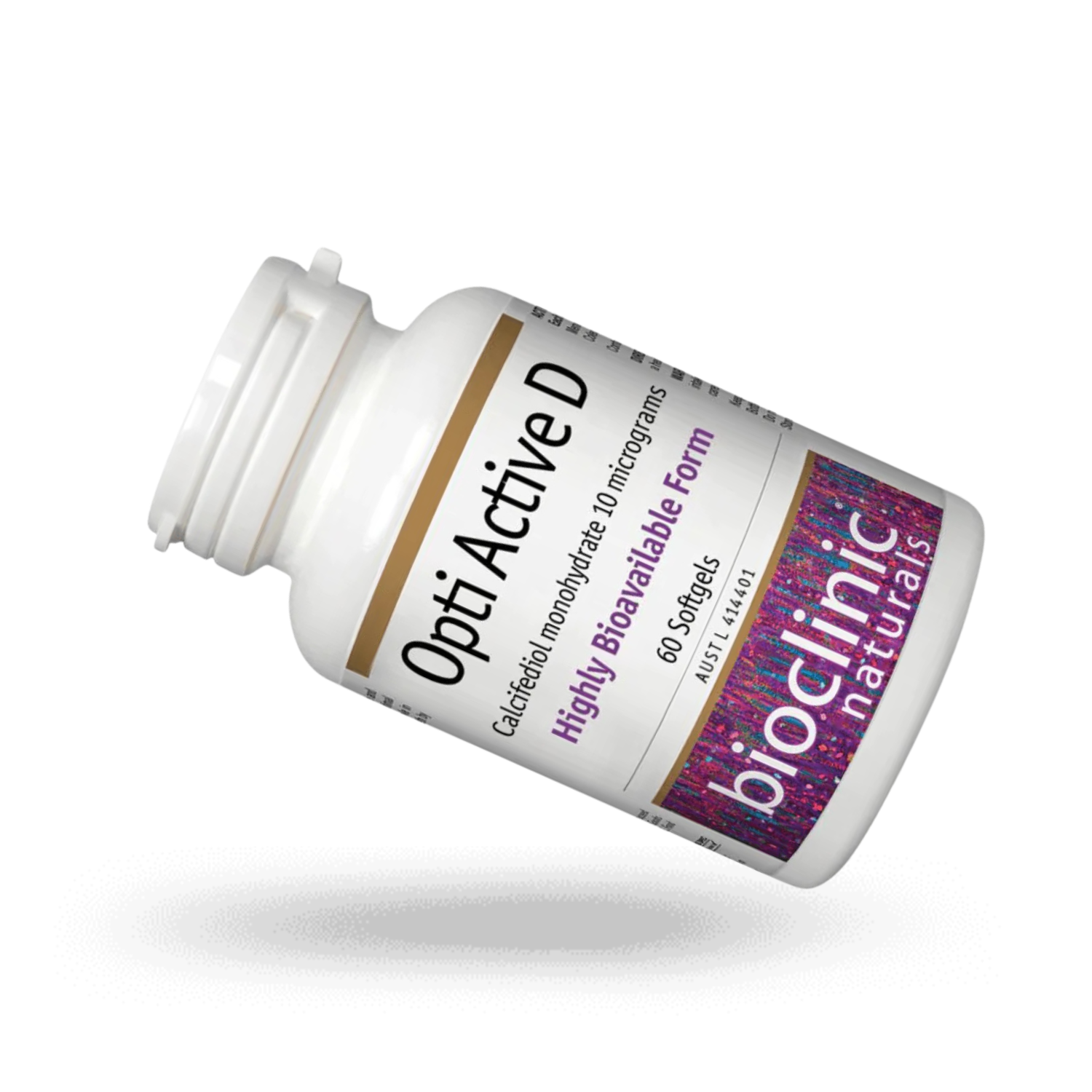
Opti Active D 60 Softgels

Regular price $99.95 AUD

Key Benefits

  • Provides fast-acting vitamin D support
  • Helps maintain optimal D serum levels
  • Supports muscle & skeletal function
View full range — Bioclinic Naturals

💗 Australian-owned • Independent wellness

Practitioner-grade support. Always read the label and follow the directions for use.

Join Wellness Circle

For customers who choose quality over shortcuts. Benefits apply $200+. T&Cs apply.

Shipping & Dispatch $19.95 flat rate · Free over $200

Australia Post — fully trackable.


  • Free shipping: $200+
  • Flat rate: $19.95 Australia-wide

Dispatch: usually within 1–3 business days

Superior Bioavailable Vitamin D

Opti Active D™ provides 10 µg of calcifediol monohydrate, the active form of vitamin D, for superior bioavailability. Calcifediol is the circulating form of vitamin D and does not need to be metabolized by the liver.


Provides fast-acting vitamin D support
Helps maintain optimal D serum levels
Supports muscle & skeletal function
Promotes immune system readiness

  • Vitamin D supplementation may help:

    Support bone mass and strength in post-menopausal women
    Maintain healthy immune system function
    Maintain healthy foetal development
    Maintain bone health and strength
    Support a healthy pregnancy
    Support bone mineralisation
    Calcium absorption

  • Convenient once-daily formula

Opti-D™ Calcifediol monohydrate (Vitamin D) 10 µg

  • Adults: 1 tablet daily or as directed by a healthcare practitioner.
  • Use in children under 9 years is not recommended
  • Should not be taken in combination with other supplements containing vitamin D without medical advice
  • Calcifediol may have similar effects to vitamin D; consult your health professional before taking it in combination with other medicines.
  • Always read the label.
  • Dietary supplements should not replace a balanced diet
  • If symptoms persist, worsen, or change unexpectedly, consult your healthcare professional
Vitamin D FAQsCommon questions about vitamin D supplements
What does vitamin D help support?

Vitamin D helps support calcium absorption, bone health, muscle function and immune system health. It is commonly used when vitamin D levels, sun exposure, bone health, general wellbeing or practitioner-guided supplementation are a concern.

How do I choose the right vitamin D supplement?

Look at the vitamin D form, dose strength, whether it includes vitamin K2 or other nutrients, serving size, age suitability and whether the product is designed for daily maintenance or practitioner-guided use. The right option depends on your vitamin D status, lifestyle, diet, sun exposure and individual needs.

What is the difference between vitamin D3 and vitamin D2?

Vitamin D3 is also known as cholecalciferol, while vitamin D2 is known as ergocalciferol. Many supplements use vitamin D3, although both forms may be used in different products. Always check the label to see which form is included and follow the directions provided.

What does vitamin D with K2 mean?

Some vitamin D products include vitamin K2 because both nutrients are commonly used in bone health formulas. Vitamin D supports calcium absorption, while vitamin K2 is often included in formulas focused on calcium utilisation and bone support. If you take blood-thinning medication such as warfarin, seek professional advice before using products containing vitamin K.

Should I take vitamin D with calcium or magnesium?

Vitamin D is often used alongside calcium or magnesium in bone health formulas, but not everyone needs all three as separate supplements. Check the full ingredient panel to avoid doubling up, especially if you already take a multivitamin, bone formula or practitioner product.

When is the best time to take vitamin D?

Vitamin D is fat-soluble, so many people take it with a meal that contains some dietary fat. Timing can vary depending on the product and your routine. Always follow the product label and avoid taking more than directed.

Can I get enough vitamin D from food alone?

Some foods contain vitamin D, but food intake alone may not be enough for everyone. Sun exposure, skin type, season, clothing, indoor lifestyle, age, location and health status can all influence vitamin D levels. If you are concerned, speak with a qualified health professional about testing and suitability.

How do I know if I need vitamin D?

The best way to check vitamin D status is through appropriate blood testing arranged by a health professional. Symptoms such as tiredness, low mood, muscle aches or general weakness can have many causes, so it is best not to assume vitamin D is the reason without proper assessment.

Can I take vitamin D every day?

Many vitamin D products are designed for daily use, while others may use different dosing directions. Follow the label carefully. Higher-strength vitamin D products should be used with extra care and may be better suited to practitioner-guided use.

Can I take more than one vitamin D product at the same time?

Use caution when combining vitamin D products. Multivitamins, bone formulas, immune formulas, pregnancy supplements, children’s formulas and standalone vitamin D products may all contain vitamin D. Taking several together can increase your total intake and may not be suitable.

Can too much vitamin D be harmful?

Yes. Vitamin D is fat-soluble, so excessive intake can build up in the body and may cause unwanted effects. Avoid taking high-dose vitamin D unless recommended by a qualified health professional, especially if you are also taking calcium or other bone health supplements.

Is vitamin D suitable during pregnancy or breastfeeding?

Vitamin D needs may be important during pregnancy and breastfeeding, but the right product and dose can vary. If you are pregnant, planning pregnancy or breastfeeding, speak with your doctor, midwife, pharmacist or qualified health professional before using vitamin D supplements.

Can children take vitamin D supplements?

Some vitamin D products are designed for children, but not every vitamin D supplement is suitable for every age group. Use products that clearly state children’s suitability and follow the label directions. For babies, young children or children with medical conditions, seek professional advice first.

Can vitamin D interact with medication?

Vitamin D may not suit everyone, especially people taking certain medications or managing conditions that affect calcium levels, kidneys, parathyroid function or vitamin D metabolism. If you take medication or have a diagnosed condition, ask your doctor or pharmacist before use.

Who should be cautious with vitamin D supplements?

People with kidney disease, high calcium levels, parathyroid disorders, sarcoidosis, diagnosed medical conditions, medication use, pregnancy, breastfeeding, or those already taking high-dose vitamin D should seek professional advice before use.

Is this information a replacement for medical advice?

No. This information is general only and does not replace personalised medical advice. If you are pregnant, breastfeeding, taking medication, shopping for a child, managing a diagnosed condition, or unsure whether vitamin D is suitable for you, speak with a qualified health professional before use.