













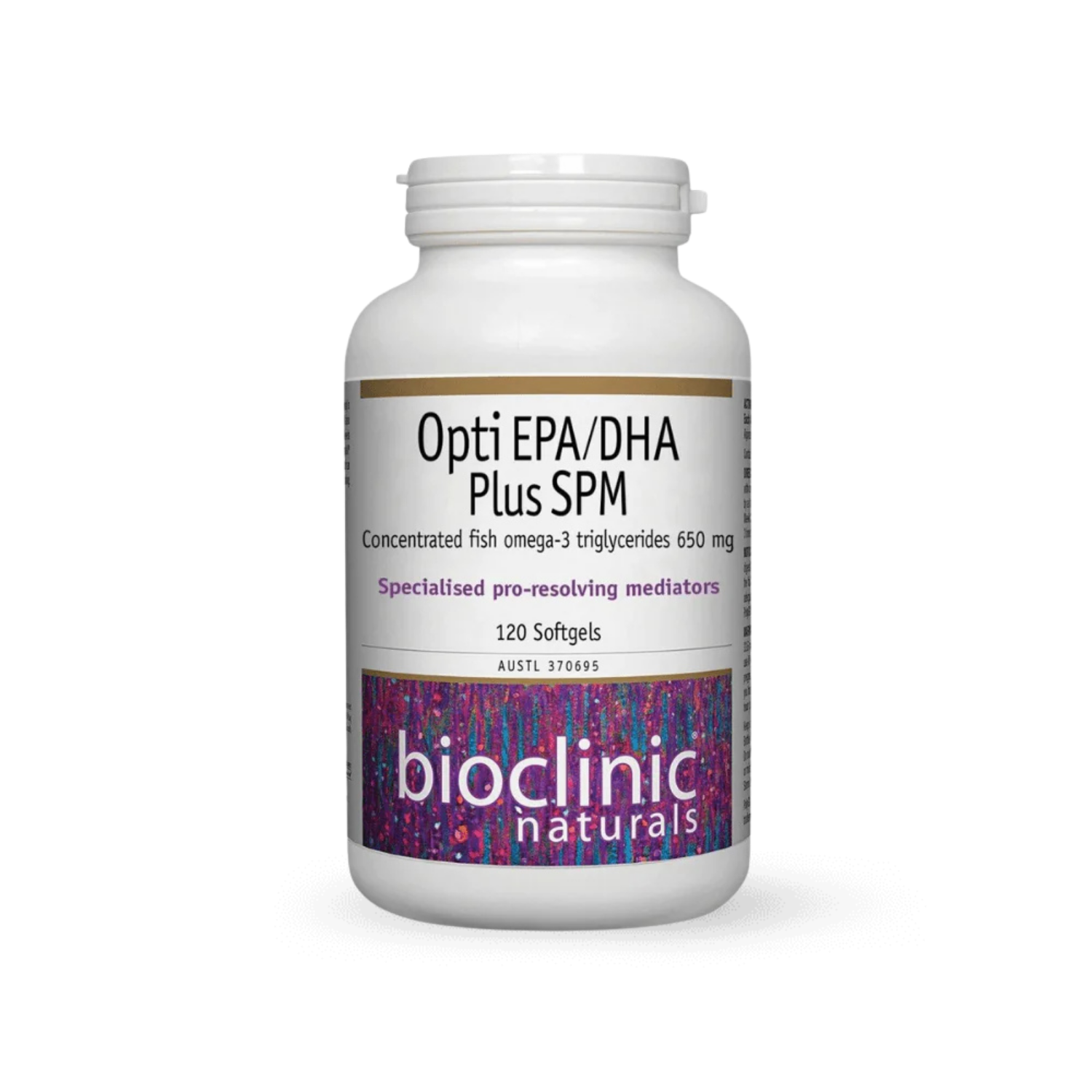
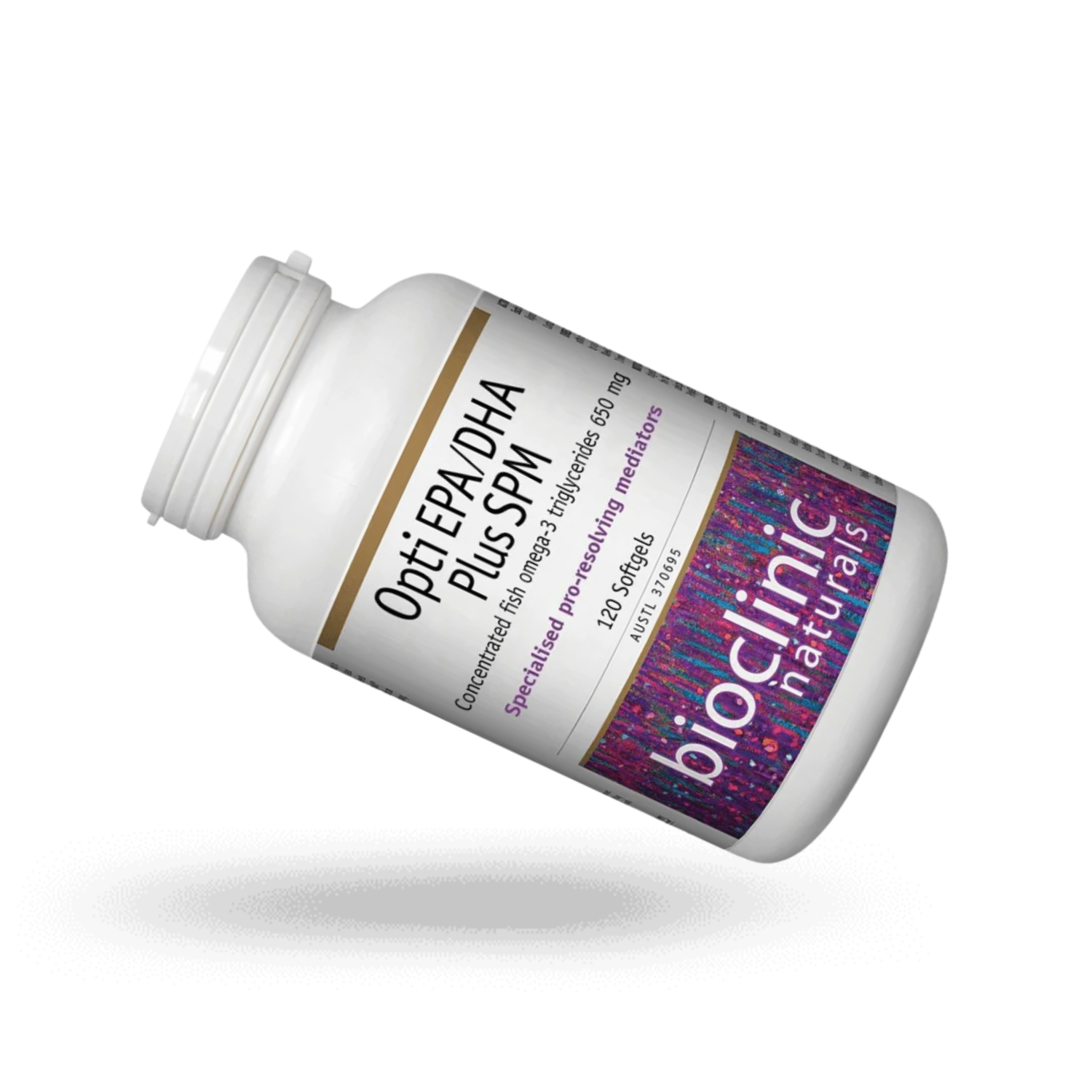
Opti EPA/DHA Plus SPM 120c

Regular price $169.95 AUD

Key Benefits

  • Helps resolve ongoing inflammation
  • Supports joint comfort & mobility
  • Promotes vascular elasticity
View full range — Bioclinic Naturals

💗 Australian-owned • Independent wellness

Practitioner-grade support. Always read the label and follow the directions for use.

Join Wellness Circle

For customers who choose quality over shortcuts. Benefits apply $200+. T&Cs apply.

Shipping & Dispatch $19.95 flat rate · Free over $200

Australia Post — fully trackable.


  • Free shipping: $200+
  • Flat rate: $19.95 Australia-wide

Dispatch: usually within 1–3 business days

Supports Inflammation, Cardiovascular & Cognitive Health

Specialised Pro-resolving Mediators

Opti EPA/DHA Plus SPM is a high-strength fish oil standardised to total pro-resolving mediators (PRMs), which are essential for fish oils' anti-inflammatory action. This fish oil also contains concentrated omega-3 fatty acids EPA, DHA, and DPA to help support cardiovascular health and function. The components of Opti EPA/DHA Plus SPM also help support healthy blood lipids and cognitive function. Additionally, they help support eye health and maintain healthy foetal brain and CNS development during pregnancy.


Helps resolve ongoing inflammation
Supports joint comfort & mobility
Promotes vascular elasticity
Maintains healthy triglyceride levels

  • Highly concentrated omega-3 fatty acids with 312 mg EPA, 208 mg DHA, and 9.75 mg DPA, with the added benefit of 45.5 mcg standardised total pro-resolving mediators (PRMs).
  • Specialised pro-resolving mediators are naturally produced by converting certain components of omega-3 fatty acids and are essential for relieving inflammation.
  • Sustainable wild-caught fish oil from the oceans off the coasts of Peru and Chile.
  • Uses only small, cold-water, oily fish species such as anchovy, sardine, mackerel, and herring that are naturally high in omega-3 fatty acids and low in contaminants such as heavy metals.
  • Independently tested to meet purity standards set by the Global Organisation for EPA and DHA Omega-3 (GOED) and is therefore extremely low in contaminants such as heavy metals.
  • Enteripure® softgel capsules offer targeted delivery using technology that embeds only natural ingredients into the softgel casing to prevent them from breaking down in the stomach. This ensures no fishy aftertaste with minimal excipients.
  • Supports cardiovascular system health, maintenance of healthy blood lipids, and helps reduce inflammation in the body.
  • Supports brain health, cognitive function, and eye health.
  • Helps support healthy foetal CNS/brain development.

Total Omega 3650 mg Eicosapentaenoic acid (EPA)312 mg Docosahexaenoic acid (DHA)208 mg Docosapentaenoic acid (DPA)9.75 mg

  • 2 capsules once or twice daily
  • Advise your doctor of any medicine you take during pregnancy, particularly in your first trimester.
  • Always read the label.
  • Dietary supplements should not replace a balanced diet.
  • If symptoms persist, worsen or change unexpectedly, consult your healthcare professional.
Omega-3 FAQsCommon questions about omega-3 supplements
What do omega-3 supplements help support?

Omega-3 fatty acids are essential fats involved in normal cell membrane structure, heart health, brain health, eye health and inflammatory balance. Omega-3 supplements are commonly considered when dietary intake of oily fish is low or when EPA and DHA support is desired.

What is the difference between EPA and DHA?

EPA and DHA are two long-chain omega-3 fatty acids commonly found in fish oil, krill oil and algae oil products. EPA is often emphasised in formulas positioned for inflammatory balance and heart health, while DHA is commonly highlighted for brain, eye and pregnancy-related nutritional support. Many products contain both.

What is ALA?

ALA is a plant-based omega-3 fatty acid found in foods such as flaxseed, chia seeds and walnuts. The body can convert some ALA into EPA and DHA, but this conversion is limited. People wanting direct EPA and DHA support often choose fish oil, krill oil or algae-derived omega-3 products.

How do I choose the right omega-3 supplement?

Look at the amount of EPA and DHA per serve, the source of oil, capsule count, serving size, concentration, freshness, flavour, sustainability information, allergen suitability and whether the product is designed for general health, pregnancy, children, heart support, joint support or practitioner-guided use.

Is high-strength fish oil better?

Not always. A high-strength fish oil may provide more EPA and DHA per capsule, which can reduce the number of capsules needed. However, the best product depends on your needs, tolerance, dose instructions and whether you prefer fish oil, krill oil, algae oil or a lower-dose daily formula.

What is the difference between fish oil and krill oil?

Fish oil and krill oil both provide omega-3 fatty acids, but they differ in source, concentration, capsule size, natural colour and how the omega-3s are carried in the oil. The better choice depends on the product formula, EPA/DHA amount, tolerance, allergen suitability and personal preference.

What is algae omega-3?

Algae omega-3 is a plant-origin source of omega-3, often used for DHA or DHA/EPA support. It may suit people who avoid fish or prefer a vegetarian or vegan-friendly omega-3 option, depending on the product label and capsule ingredients.

Can omega-3 supplements help if I do not eat fish?

Omega-3 supplements may be useful for people who do not regularly eat oily fish. Fish oil, krill oil and algae oil products can provide EPA and DHA directly, while plant-based foods such as flaxseed and chia provide ALA. The right option depends on diet, goals and suitability.

When is the best time to take omega-3?

Omega-3 supplements are often taken with food to support tolerance and reduce fishy aftertaste or reflux. Follow the product label, as serving size and timing can vary between capsules, liquids and practitioner formulas.

Can fish oil cause reflux or a fishy aftertaste?

Yes. Some people may notice fishy burps, reflux, nausea or digestive discomfort with fish oil. Taking it with meals, splitting the dose, choosing an odourless formula, or trying a different omega-3 source may help. Stop use and seek advice if symptoms are persistent or severe.

Can I take omega-3 with other supplements?

Omega-3 is commonly used alongside multivitamins, vitamin D, magnesium, joint formulas, pregnancy formulas or heart health products. Check the full ingredient panels so you do not double up unnecessarily, especially if more than one product contains fish oil, krill oil, DHA or EPA.

Can omega-3 supplements interact with medication?

Omega-3 supplements may not suit everyone, especially people taking blood-thinning medication, preparing for surgery, using high-dose omega-3 products, or managing a diagnosed condition. Ask your doctor or pharmacist before use if you take regular medication.

Is omega-3 suitable during pregnancy or breastfeeding?

DHA is commonly considered during pregnancy and breastfeeding because omega-3 intake can be important during these life stages. Suitability depends on the product, dose, source, purity, pregnancy label directions and your individual needs. Speak with your doctor, midwife, pharmacist or qualified health professional before use.

Can children take omega-3 supplements?

Some omega-3 products are designed for children, but not every fish oil, krill oil or DHA product is suitable for every age group. Use products that clearly state children’s suitability and follow the label directions. For infants, young children or children with medical conditions, seek professional advice first.

Can I take more than one omega-3 product at the same time?

Use caution when combining omega-3 products. Fish oil capsules, krill oil, algae DHA, pregnancy DHA, children’s omega-3 and joint formulas may all contribute to your total EPA and DHA intake. Taking several together may not be necessary unless professionally recommended.

Who should be cautious with omega-3 supplements?

People taking blood-thinning medication, preparing for surgery, managing bleeding disorders, seafood allergy, pregnancy, breastfeeding, diagnosed medical conditions, or using high-dose omega-3 products should seek professional advice before use.

Is this information a replacement for medical advice?

No. This information is general only and does not replace personalised medical advice. If you are pregnant, breastfeeding, taking medication, shopping for a child, managing a diagnosed condition, allergic to seafood, or unsure which omega-3 product suits you, speak with a qualified health professional before use.