















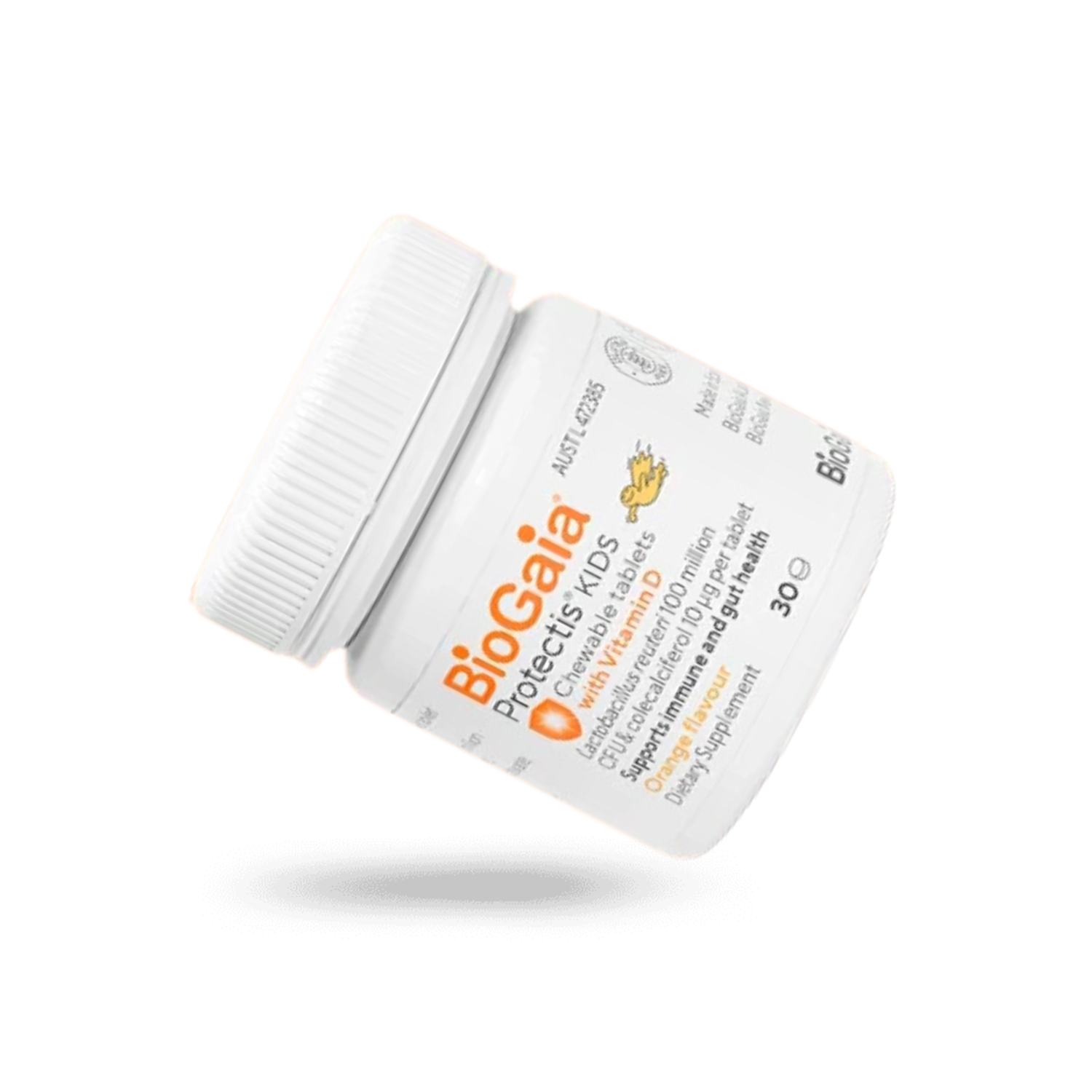
BioGaia Protectis Kids Chewable Tablets with Vitamin D

Regular price $79.95 AUD

Key Benefits

  • Supports healthy gut microbiome balance in children
  • Helps maintain digestive comfort
  • Supports immune system function
View full range — BioGaia

Australian-owned • Independent wellness

Practitioner-grade support. Always read the label and follow the directions for use.

Shipping & Dispatch $19.95 flat rate · Free over $200

Australia Post — fully trackable.


  • Free shipping: $200+
  • Flat rate: $19.95 Australia-wide

Dispatch: usually within 1–3 business days

Children’s Probiotic & Vitamin D Support

BioGaia Protectis Kids Chewable Tablets with Vitamin D provide a child-friendly probiotic designed to support digestive balance and immune health. Each orange-flavoured chewable tablet delivers the clinically researched L. reuteri Protectis® probiotic strain alongside vitamin D3, helping maintain a healthy gut microbiome while supporting normal immune function and bone development in growing children.

• Supports healthy gut microbiome balance in children

• Helps maintain digestive comfort

• Supports immune system function

• Contributes to healthy bone development

• Convenient chewable format for children

• Contains patented L. reuteri Protectis® probiotic strain

• Provides 100 million live CFU per chewable tablet

• Includes vitamin D3 (10 µg) to support immune health

• Child-friendly orange flavoured chewable tablets

• Supports digestive balance and gut microbiome health

• Gluten-free and lactose-free formulation

Limosilactobacillus reuteri DSM 17938 (L. reuteri Protectis®) – minimum 100 million CFU • Vitamin D3 (cholecalciferol) 10 µg • Isomalt • Xylitol • Orange flavour • Citric acid • Calcium stearate


Children 3 years and older:1 chewable tablet daily or as recommended by a healthcare practitioner.


Isomalt • Xylitol • Orange flavour • Citric acid • Calcium stearate.

Free from gluten, lactose and milk proteins.

Do not exceed recommended dose. Excessive consumption may produce laxative effects due to sweeteners. Vitamin supplements should not replace a balanced diet. If symptoms persist consult your healthcare professional.


Store below 25 °C in a cool, dry place. Keep out of reach of children.

Probiotics FAQsCommon questions about probiotics
What are probiotics?

Probiotics are live microorganisms, usually beneficial bacteria or yeasts, that are used to support gut health and microbial balance. They may be found in supplements, fermented foods and some functional health products. The effect of a probiotic can depend on the strain, dose, formula and individual person.

How do I choose the right probiotic?

Start by looking at the strain or strains used, the CFU amount, storage instructions, age suitability, and whether the product is designed for general gut support, antibiotic use, children, women’s health, travel, bloating or immune support. The best probiotic is not always the highest CFU product — it is the one that best matches your needs and tolerance.

What does CFU mean?

CFU stands for colony forming units. It refers to the number of live microorganisms provided by the product. A higher CFU count does not automatically mean a better product, because the strain, formula quality, storage stability and intended use also matter.

Do different probiotic strains do different things?

Yes. Different probiotic strains may be used for different purposes. For example, some formulas are designed for general digestive support, while others may focus on antibiotic-associated digestive balance, women’s health, children’s gut support or immune support. Always check the product label and intended use.

Should probiotics be taken with antibiotics?

Some people use probiotics during or after a course of antibiotics to support gut microbial balance. If taking antibiotics, ask your doctor or pharmacist whether a probiotic is suitable and how far apart to take it from your medication. Always follow the product label and professional advice.

When is the best time to take probiotics?

Timing depends on the product. Some probiotics are taken with food, while others may be taken away from meals. Follow the directions on the label, as different probiotic strains and delivery systems may have different instructions.

Do probiotics need to be refrigerated?

Some probiotics require refrigeration, while others are shelf-stable. Always follow the storage instructions on the product label. If a probiotic says to refrigerate after opening or store below a certain temperature, those directions should be followed to help maintain product quality.

Are shelf-stable probiotics still effective?

Shelf-stable probiotics can still be suitable when they are specifically formulated and tested for stability. The key is to follow the label directions, check the expiry date, avoid excess heat, and store the product as recommended by the manufacturer.

Can probiotics cause bloating or digestive changes?

Some people may notice temporary digestive changes such as bloating, gas or changes in bowel habits when starting a probiotic. This can vary depending on the person and formula. If symptoms are severe, persistent or unusual, stop use and seek professional advice.

Can children take probiotics?

Some probiotics are specifically formulated for children, but not every probiotic is suitable for every age group. Use products that clearly state children’s suitability and follow the label directions. For infants, young children, premature babies or children with medical conditions, seek advice from a qualified health professional first.

Are probiotics suitable during pregnancy or breastfeeding?

Some probiotic products may be suitable during pregnancy or breastfeeding, but suitability depends on the strain, dose, formula and individual circumstances. Speak with your doctor, midwife, pharmacist or qualified health professional before use during pregnancy or breastfeeding.

Who should be cautious with probiotics?

People who are seriously unwell, immune-compromised, taking immune-suppressing medicines, pregnant, breastfeeding, caring for an infant, or managing a diagnosed medical condition should seek professional advice before using probiotics. Probiotics are generally well tolerated by many people, but they may not be suitable for everyone.

Can I take more than one probiotic at the same time?

Use caution when combining probiotic products. Taking multiple probiotics may double up on strains, increase total CFU intake, or cause digestive discomfort in some people. If using more than one gut health product, check the labels carefully and seek professional guidance if unsure.

What is the difference between probiotics and prebiotics?

Probiotics are live microorganisms. Prebiotics are fibres or compounds that help feed beneficial gut bacteria. Some products contain both and may be called synbiotics. If you are sensitive to fibre, prebiotic-containing formulas may feel different from probiotic-only products.

Is this information a replacement for medical advice?

No. This information is general only and does not replace personalised medical advice. If you are pregnant, breastfeeding, taking medication, immune-compromised, shopping for a child, managing digestive symptoms or unsure which probiotic suits you, speak with a qualified health professional before use.