














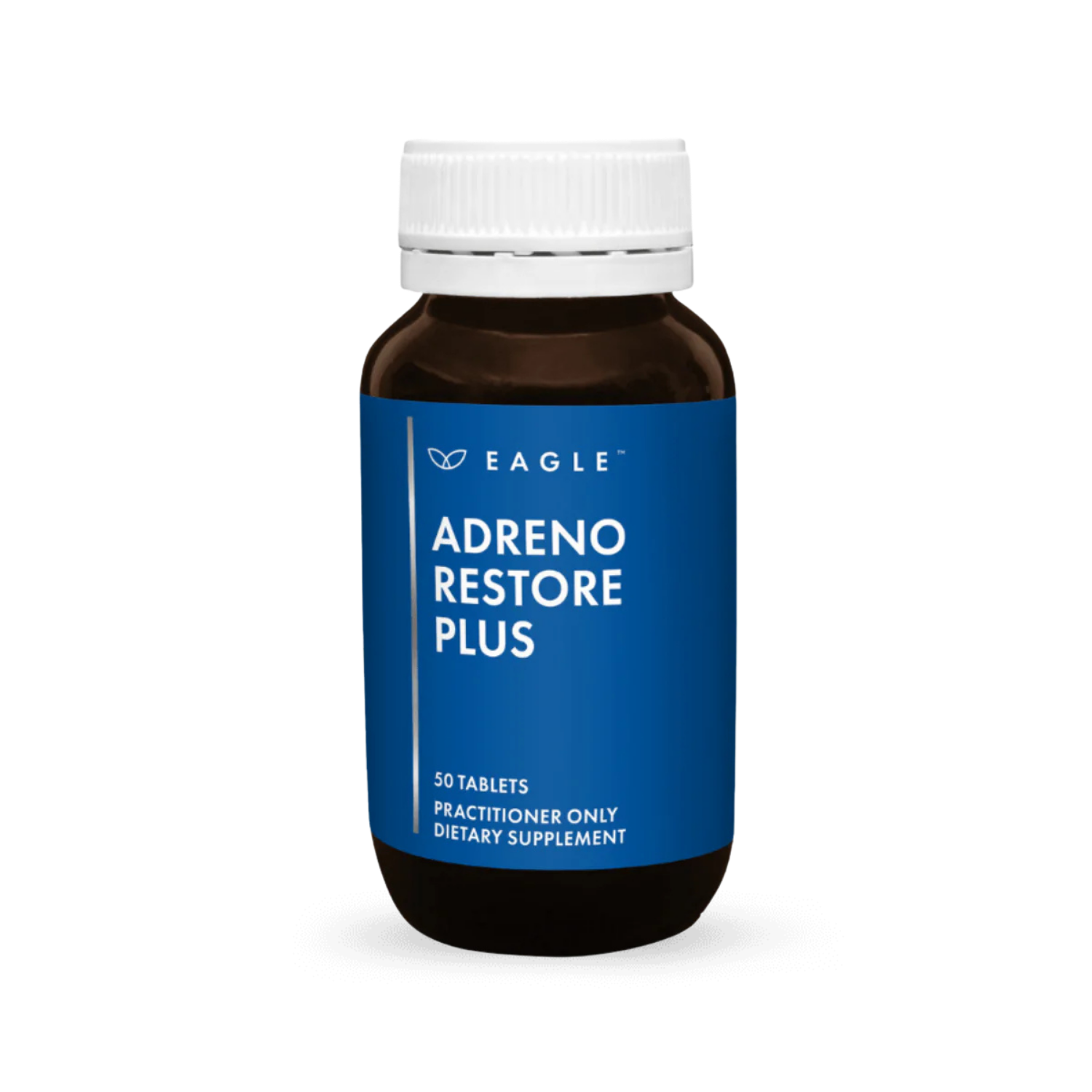
Adreno Restore Plus 50t

Regular price $79.95 AUD

💗 Australian-owned • Independent wellness

Practitioner-grade support. Always read the label and follow the directions for use.

Join Wellness Circle

For customers who choose quality over shortcuts. Benefits apply $200+. T&Cs apply.

Shipping & Dispatch $19.95 flat rate · Free over $200

Australia Post — fully trackable.


  • Free shipping: $200+
  • Flat rate: $19.95 Australia-wide

Dispatch: usually within 1–3 business days

Supports Adrenal Health & Stress Response with Ayurvedic Herbs

Eagle Adreno Restore Plus has been formulated with Withania root and is used in traditional Ayurvedic medicine to support the nervous system and calm the mind. It also contains Licorice to support adrenal gland function, used in conventional Western herbal medicine, and Siberian ginseng to support mental and physical endurance and a healthy stress response. Vitamin C also assists with maintaining a healthy immune system, and B vitamins for general health and well-being.


  • Traditionally used in Western herbal medicine to maintain healthy adrenal gland function.
  • Traditionally used in Ayurvedic medicine as:

    a rejuvenative and longevity tonic
    to calm the mind and relax the nervous system
    to promote energy levels and assist with recovery from convalescence
    to help with recovery from illness in elderly individuals
    to support cognitive function, memory, and mental recall
    to relieve sleeplessness

  • Supports a healthy stress response in the body.
  • Relieves feelings of general malaise/debility.
  • Supports physical endurance and stamina.
  • Supports healthy immune system function and helps fight illness.

Nicotinamide 25 mg; Calcium pantothenate 54.5 mg (equiv. pantothenic acid [vitamin B5] 50 mg); Pyridoxal-5-phosphate monohydrate 19 mg (equiv. pyridoxine [vitamin B6] 12 mg); d-alpha-tocopheryl acid succinate 74 mg (equiv. natural vitamin E 90 IU); Zinc citrate dihydrate 31 mg (equiv. zinc 10 mg); Ascorbic acid (vitamin C) 75 mg; Withania somnifera (KSM-66® Ashwagandha) root extract 300 mg (equiv. dry root 3.75 g; standardised to withanolides 15 mg); Eleutherococcus senticosus (Siberian ginseng) root extract 67 mg (equiv. dry root 1 g; standardised to syringaresinol diglucosides 533 mcg); Glycyrrhiza glabra (Licorice) root extract 55 mg (equiv. dry root 963 mg; standardised to glycyrrhizinic acid 11 mg).

Adults: Take 1 tablet twice daily Or as directed by your healthcare professional

Vitamin and mineral supplements should not replace a balanced diet.
If symptoms persist, seek the advice of your healthcare professional.

Ashwagandha FAQs.Common questions about ashwagandha supplements
What is ashwagandha?

Ashwagandha, also known as Withania somnifera, is a herb traditionally used in Ayurvedic medicine. In supplements, it is commonly used in stress support, nervous system support, sleep routine, vitality and adaptogen-style formulas. The effect can vary depending on the extract, dose, formula and individual person.

What do ashwagandha supplements help support?

Ashwagandha supplements are commonly used to support stress adaptation, nervous system balance, relaxation, sleep quality, energy, vitality and general wellbeing. The exact purpose depends on the product, extract type, dose and whether it is used alone or as part of a broader formula.

How do I choose the right ashwagandha product?

Look at the extract type, amount per serve, root or whole-plant source, standardised withanolide content, added herbs or nutrients, dose directions and suitability warnings. The best option depends on your needs, sensitivity, medication use, health status and whether you want a standalone ashwagandha product or a broader stress-support formula.

What are withanolides?

Withanolides are naturally occurring compounds found in ashwagandha. Some supplements list a standardised withanolide amount to show consistency between batches. A higher withanolide percentage is not automatically better for every person, especially if you are sensitive to herbal extracts.

Is ashwagandha the same as a sedative?

No. Ashwagandha is not the same as a sleeping tablet or sedative medicine. It is usually positioned as a stress-adaptation or nervous system support herb. Some people may feel relaxed or drowsy when using it, so caution is needed if driving, operating machinery or combining it with sedating medicines.

Can ashwagandha support sleep?

Ashwagandha may be included in sleep and relaxation formulas where stress or nervous system tension is part of the picture. It is not suitable for every type of sleep concern, and ongoing insomnia, anxiety, snoring, breathing pauses, pain or persistent sleep problems should be discussed with a qualified health professional.

Can ashwagandha support stress?

Ashwagandha is commonly used in stress-support formulas and adaptogen-style products. Stress can have many causes, so supplements should be considered alongside sleep, diet, workload, lifestyle, emotional support and professional care where needed.

When is the best time to take ashwagandha?

Timing depends on the product and your tolerance. Some people take ashwagandha in the evening as part of a relaxation routine, while others take it during the day in stress-support formulas. Always follow the product label, especially if the product contains other herbs or nutrients.

Can ashwagandha cause side effects?

Yes. Some people may experience drowsiness, stomach upset, diarrhoea, nausea, vomiting or changes in how they feel when taking ashwagandha. Stop use and seek advice if symptoms are persistent, severe or unusual.

Can ashwagandha affect the liver?

There have been rare reports of liver injury linked to ashwagandha supplements. People with current or previous liver problems should avoid ashwagandha unless advised otherwise by a qualified health professional. Stop use and seek medical advice if unusual symptoms occur, such as yellowing of the skin or eyes, dark urine, severe fatigue, nausea or abdominal pain.

Can I take ashwagandha with medication?

Use caution. Ashwagandha may not suit some medicines, including sedatives, anxiety medicines, antidepressants, thyroid medication, immune-suppressing medicines, diabetes medicines, blood pressure medicines or other prescribed treatments. Ask your doctor or pharmacist before combining ashwagandha with medication.

Is ashwagandha suitable during pregnancy or breastfeeding?

No. Ashwagandha should be avoided during pregnancy and breastfeeding unless specifically advised by a qualified health professional. Pregnancy and breastfeeding are times when herbal supplement suitability matters, so do not assume a stress-support herb is automatically safe.

Can children take ashwagandha?

Ashwagandha is not suitable for every age group. Children should only use products that clearly state age suitability and only under appropriate professional guidance. For young children, teenagers with health concerns, or children taking medication, seek advice first.

Can I take ashwagandha with magnesium or other calming supplements?

Use caution when combining calming products. Magnesium, kava, passionflower, lemon balm, L-theanine, sleep formulas and nervous system blends may overlap with ashwagandha or increase drowsiness in some people. Check the full ingredient panels before combining products.

Who should be cautious with ashwagandha?

People who are pregnant, breastfeeding, taking medication, managing liver problems, thyroid conditions, autoimmune conditions, hormone-sensitive conditions, diabetes, blood pressure concerns, mental health conditions, or upcoming surgery should seek professional advice before using ashwagandha.

Is this information a replacement for medical advice?

No. This information is general only and does not replace personalised medical advice. If you are pregnant, breastfeeding, taking medication, managing a diagnosed condition, shopping for a child, or unsure whether ashwagandha is suitable for you, speak with a qualified health professional before use.