














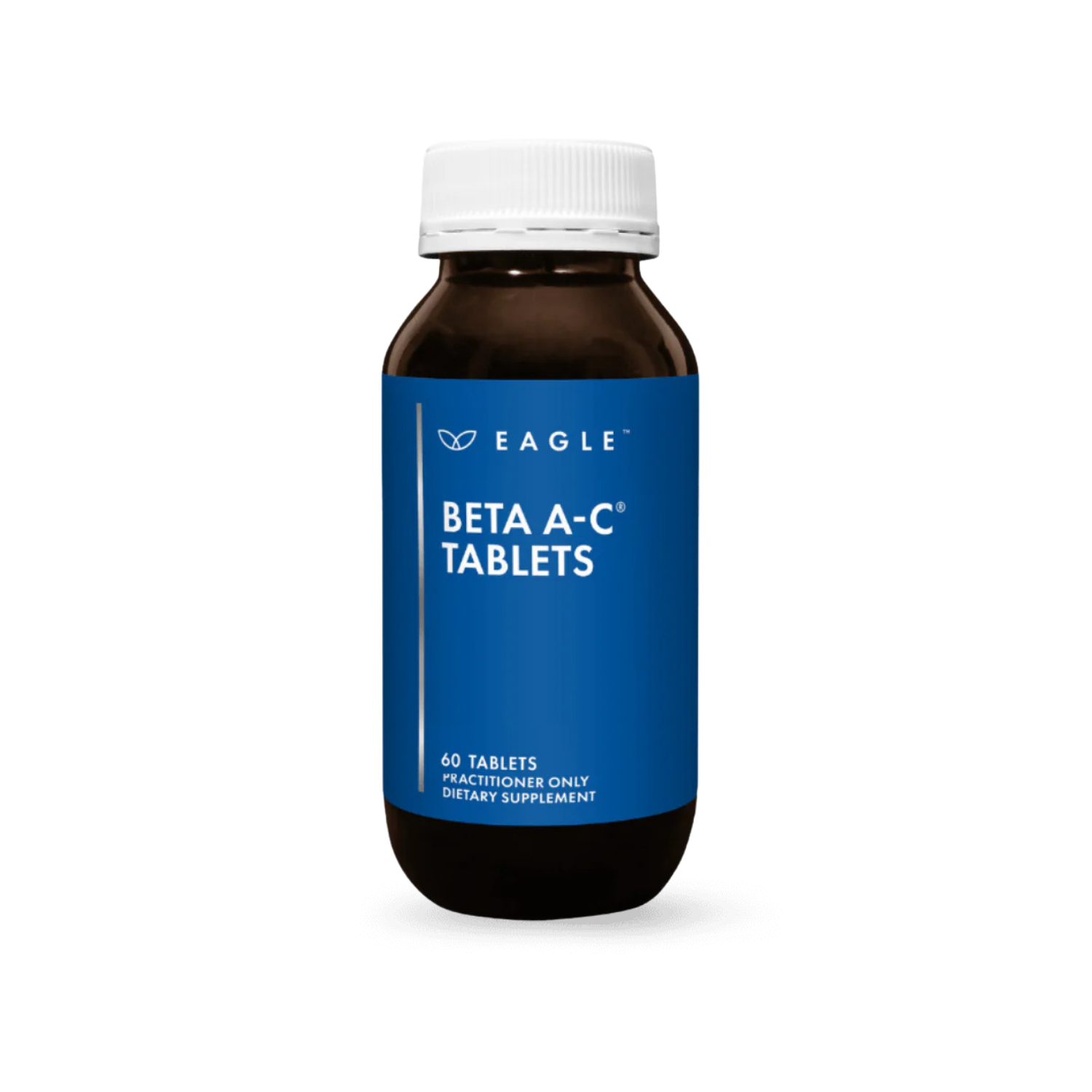
Beta A-C Tablets 60 Tablets

Regular price $61.95 AUD

Key Benefits

  • Supports immune health
  • Helps collagen formation
  • Provides antioxidant support

💗 Australian-owned • Independent wellness

Practitioner-grade support. Always read the label and follow the directions for use.

Join Wellness Circle

For customers who choose quality over shortcuts. Benefits apply $200+. T&Cs apply.

Shipping & Dispatch $19.95 flat rate · Free over $200

Australia Post — fully trackable.


  • Free shipping: $200+
  • Flat rate: $19.95 Australia-wide

Dispatch: usually within 1–3 business days

Boost Immune Health & Reduce Cold Symptoms with Antioxidants for Skin & Connective Tissue Support

Beta A-C® Tablets have been formulated to support healthy immune system function and reduce the severity and duration of common cold symptoms. This antioxidant formulation also supports skin health and assists connective tissue formation.


Supports immune health
Helps collagen formation
Provides antioxidant support
Supports skin and tissue health

Decrease common cold duration and relieve the severity of common cold symptoms*

Relieve the severity of symptoms of mild upper respiratory tract infections, including respiratory tract congestion*

Reduce symptoms of common colds and flu such as sneezing, cough, sore throat, and runny nose*

Supports wound healing, skin repair and body tissue regeneration*

Support collagen health and formation*

Assist connective tissue production*

Reduce free radicals formed in the body*

Support healthy immune system function*

Maintains immune system to fight illness*

Supports blood vessel health and artery health*

Support healthy stress response in the body*

*In adults, adolescents and ageing individuals.

Ascorbic acid (vitamin C) 589 mg; Sodium ascorbate 146 mg (equiv. ascorbic acid 127 mg); Calcium ascorbate dihydrate 104 mg (equiv. ascorbic acid 84 mg); Total vitamin C 800 mg; d-alpha-tocopheryl acid succinate 41.38 mg (equiv. natural vitamin E 50 IU); Dunaliella salina extract 7 mg (derived from fresh cells 13 mg; equiv. carotenoids calculated as beta-carotene 525 micrograms); Rutoside (rutin) 150 mg; Citrus bioflavonoids extract 50 mg; Zinc amino acid chelate 10 mg (equiv. zinc 2 mg).

ADULTS & ADOLESCENTS: Take 1 to 2 tablets twice daily with food.
Or as directed by your healthcare professional.

Children under two years of age should not be treated for symptoms of respiratory tract infections without medical advice.

Vitamin and mineral supplements should not replace a balanced diet.

Contains trace amounts of sulphur dioxide.

If symptoms persist, seek additional professional advice.

Vitamin C FAQsCommon questions about vitamin C supplements
What does vitamin C help support?

Vitamin C is an essential nutrient involved in immune system function, collagen formation, skin health, antioxidant protection, wound healing and iron absorption. Vitamin C supplements are commonly used when dietary intake, immune support, skin support, collagen support or antioxidant support are a concern.

How do I choose the right vitamin C supplement?

Look at the form of vitamin C, amount per serve, added nutrients, dose directions, flavour, acidity, age suitability and whether the product is designed for immune support, skin support, iron absorption, antioxidant support or practitioner-guided use. The right option depends on your needs, tolerance and the full formula.

What is the difference between ascorbic acid and buffered vitamin C?

Ascorbic acid is a common form of vitamin C. Buffered vitamin C products may combine vitamin C with minerals such as calcium, magnesium, potassium or sodium to make the formula less acidic. Buffered forms may suit people who find regular ascorbic acid harsh on the stomach.

What is liposomal vitamin C?

Liposomal vitamin C is a delivery form where vitamin C is packaged with phospholipids. It is often positioned for improved absorption or gentler delivery. The best choice depends on the product quality, dose, tolerance and whether you prefer capsules, liquids, powders or tablets.

What is esterified vitamin C?

Esterified vitamin C is a form used in some supplements and is often marketed as a gentler or non-acidic vitamin C option. Check the label carefully, as formulas vary and may also include minerals, bioflavonoids or other supporting nutrients.

Can vitamin C support immune health?

Vitamin C plays an important role in normal immune system function. Some people choose vitamin C during times of increased immune demand or when dietary intake may be low. It is not a replacement for medical care, and ongoing or severe symptoms should be assessed by a health professional.

Can vitamin C support collagen formation?

Vitamin C is involved in normal collagen formation in the body. This is why it is often included in skin, hair, nail, joint, wound-healing and collagen-support formulas. Collagen and skin health are also influenced by protein intake, zinc, sun exposure, sleep, hormones and overall health.

Can vitamin C help with iron absorption?

Vitamin C can support the absorption of non-haem iron from plant foods and some iron supplements. This is why some iron formulas include vitamin C. Check the full product formula before adding extra vitamin C, especially if you already take an iron product that includes it.

When is the best time to take vitamin C?

Timing depends on the product and your tolerance. Some people take vitamin C with food to reduce stomach discomfort, while others take it at a different time of day based on the label directions. Always follow the product instructions and avoid taking more than directed.

Can vitamin C upset the stomach?

Yes. Some people may experience stomach discomfort, cramps, reflux, diarrhoea, flatulence or loose stools, especially with higher-dose vitamin C or acidic forms such as ascorbic acid. If this occurs, check the dose, take it with food if suitable, or consider a gentler form.

Can too much vitamin C be harmful?

Yes. Although vitamin C is water-soluble, taking too much from supplements can still cause unwanted effects. High supplemental intake may contribute to digestive upset and may increase kidney stone risk in some people. Avoid high-dose vitamin C unless it suits your needs and has been professionally recommended.

Can I take more than one vitamin C product at the same time?

Use caution when combining vitamin C products. Immune formulas, iron products, collagen products, multivitamins, children’s formulas and antioxidant blends may all contain vitamin C. Taking several together can increase your total intake unnecessarily.

Can vitamin C be taken with zinc?

Vitamin C and zinc are commonly combined in immune support formulas. This can be suitable for some people, but check the dose of both nutrients before adding extra products. Zinc can cause nausea or mineral-balance issues at higher intakes, so avoid stacking multiple immune formulas without checking the labels.

Can vitamin C be taken with collagen?

Yes, vitamin C is often used alongside collagen because vitamin C supports normal collagen formation. Some collagen products already include vitamin C, while others are plain collagen powders. Check the full formula before adding extra vitamin C.

Can vitamin C interact with medication?

Use caution if you take regular medication or have a diagnosed condition. Vitamin C may not suit everyone, especially at higher supplemental doses. Ask your doctor or pharmacist before using high-dose vitamin C if you take medication, have kidney disease, iron overload, cancer treatment, blood disorders or other medical concerns.

Is vitamin C suitable during pregnancy or breastfeeding?

Vitamin C needs are important during pregnancy and breastfeeding, but the right product and dose can vary. If you are pregnant, planning pregnancy or breastfeeding, speak with your doctor, midwife, pharmacist or qualified health professional before using higher-dose vitamin C supplements.

Can children take vitamin C supplements?

Some vitamin C products are designed for children, but not every vitamin C supplement is suitable for every age group. Use products that clearly state children’s suitability and follow the label directions. For babies, young children or children with medical conditions, seek professional advice first.

Who should be cautious with vitamin C supplements?

People with kidney stones, kidney disease, iron overload, haemochromatosis, diagnosed medical conditions, medication use, pregnancy, breastfeeding, cancer treatment, or those shopping for a child should seek professional advice before using higher-dose vitamin C supplements.

Is this information a replacement for medical advice?

No. This information is general only and does not replace personalised medical advice. If you are pregnant, breastfeeding, taking medication, shopping for a child, managing kidney stones, iron overload, a diagnosed condition, or unsure whether vitamin C is suitable for you, speak with a qualified health professional before use.