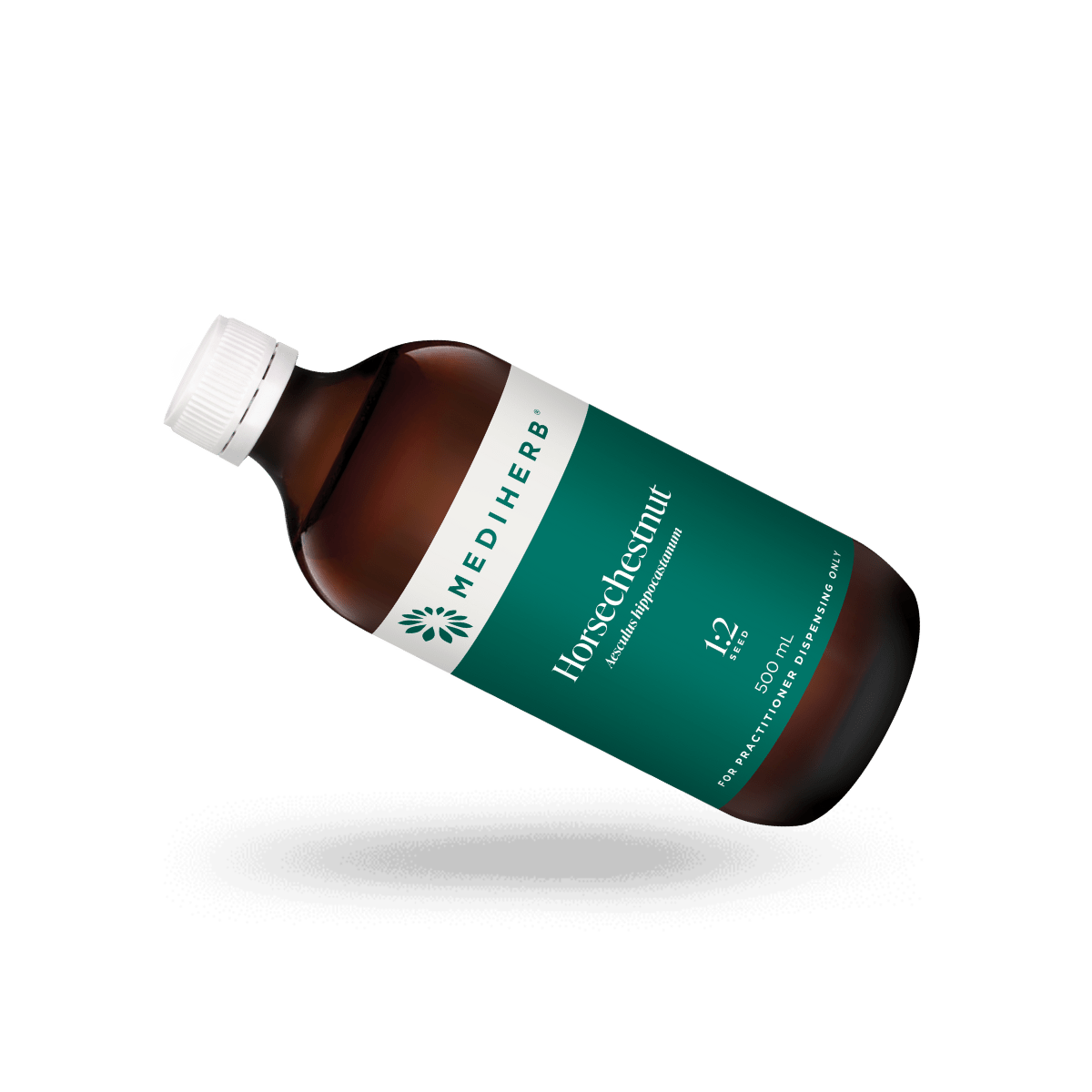
Horsechestnut 1:2 500ml

Regular price $129.95 AUD

Key Benefits

  • Traditionally used in Western herbal medicine to support healthy venous circulation
  • Supports healthy blood flow, particularly through the legs
  • Traditionally used to help relieve feelings of heaviness and discomfort associated with minor venous circulatory concerns
View full range — Mediherb Liquid

Australian-owned • Independent wellness

Practitioner-grade support. Always read the label and follow the directions for use.

Shipping & Dispatch $19.95 flat rate · Free over $199

Australia Post — fully trackable.


  • Free shipping: $199+
  • Flat rate: $19.95 Australia-wide

Dispatch: usually within 1–3 business days

Practitioner-Grade Horsechestnut Seed Liquid Extract

MediHerb Horsechestnut 1:2 is a concentrated single-herb liquid extract prepared from the seed of Aesculus hippocastanum.

Traditionally used in Western herbal medicine to support healthy venous circulation and help relieve discomfort and heaviness associated with minor venous circulatory concerns, this 500 mL practitioner preparation may be prescribed individually or incorporated into a professionally formulated herbal compound.

Sudden leg swelling, severe leg pain, skin ulceration, unexplained rectal bleeding or symptoms suggesting a blood clot require medical assessment rather than continued self-treatment.

Traditionally used in Western herbal medicine to support healthy venous circulation

Supports healthy blood flow, particularly through the legs

Traditionally used to help relieve feelings of heaviness and discomfort associated with minor venous circulatory concerns

May support vein and vascular tone within a practitioner-guided plan

May be incorporated into a professionally prepared topical formulation for local bruising support

Provides a concentrated liquid format for individualised practitioner prescribing

European monograph guidance recognises oral Horsechestnut seed preparations for chronic venous insufficiency and traditional oral or topical use for discomfort, heaviness and bruising associated with minor venous circulation concerns. The evidence applies to defined Horsechestnut seed preparations and should not be extended into guaranteed claims for every extract or every cause of leg swelling.

Practitioner-guided venous and leg-circulation support

Adults prescribed Horsechestnut as part of an individualised herbal protocol

Professional herbal compounds supporting vein and vascular tone

Adults experiencing temporary leg heaviness or discomfort after appropriate assessment

Practitioner-directed support for varicose-vein symptoms where suitability has been reviewed

Professional topical formulations for local bruising support

Customers requiring a concentrated liquid extract rather than tablets or capsules

This product is not intended for unsupervised treatment of deep vein thrombosis, pulmonary embolism, severe oedema, venous ulcers, rectal bleeding, heart failure, kidney disease or another diagnosed vascular condition.

Common name: Horsechestnut

Alternative name: Horse Chestnut

Botanical name: Aesculus hippocastanum

Plant part used: Seed

Plant family: Sapindaceae

Extract ratio: 1:2

Naturally occurring constituents: Triterpene saponins commonly described collectively as escin, along with flavonoids and other plant compounds

Ethanol content: 35% v/v

Format: Single-herb practitioner liquid extract

Bottle size: 500 mL

Horsechestnut is not the same plant as edible sweet chestnut. Raw Horsechestnut seeds and other unprocessed plant parts are unsafe to consume; use only a properly manufactured product according to its label.

Horsechestnut (Aesculus hippocastanum) seed 1:2 liquid extract.

Contains ethanol 35% v/v.

The current page does not declare a standardised escin content. Do not add an escin percentage or milligram amount unless it is confirmed on the current Australian bottle label.

Adults: Take 15–35 mL per week, or as directed by a qualified healthcare practitioner.

This is a weekly dosage range and must not be interpreted as 15–35 mL per day.

Confirm the prescribed amount against the current Australian product label before use.

Shake well before use.

Measure the prescribed amount carefully.

Dilute the oral amount in a small quantity of water immediately before taking.

Take only according to the current product label or your healthcare practitioner’s directions.

Do not exceed the recommended or professionally prescribed amount.

Do not increase the dosage because leg swelling, heaviness, visible veins, bruising or rectal discomfort remains present.

For practitioner-directed topical compounding, the current page instructs 5 mL of Horsechestnut extract to be mixed into 45 g of MediHerb Vitamin E Cream.

Do not apply the undiluted oral extract directly to the skin.

Do not apply a compounded preparation to broken or ulcerated skin, around the eyes or onto mucous membranes.

No added gluten or dairy.

Vegan-friendly.

Do not use if you have a known allergy or sensitivity to Horsechestnut or another ingredient in the preparation.

Oral Horsechestnut preparations may occasionally cause itching or allergic reactions, while topical preparations may cause local skin sensitivity.

Stop use and seek urgent medical attention if facial swelling, throat tightness, breathing difficulty, widespread hives or another serious allergic reaction develops.

Always check the current product label where allergies or dietary sensitivities are present.

For practitioner dispensing and professionally guided use.

Always read the label and follow the directions for use.

Caution is required with pre-existing cholestasis. Consult your healthcare practitioner before use if you have reduced or obstructed bile flow, gallbladder disease, liver disease, jaundice or abnormal liver-function results. This caution appears on the current GhamaHealth product page and should remain unless the current Australian label states otherwise.

Consult your healthcare practitioner before use if you take warfarin, apixaban, rivaroxaban, dabigatran, aspirin, clopidogrel or another anticoagulant or antiplatelet medicine.

European assessment information notes a theoretical possibility that aescin could increase anticoagulant effects, although confirmed case reports were not identified. The warning should therefore be precautionary rather than presented as a proven interaction.

Consult your healthcare practitioner before use if you have a bleeding disorder, bruise easily, have an upcoming operation or regularly use anti-inflammatory medicines.

Do not use this product as a substitute for medical assessment of unexplained leg swelling, varicose-vein complications, rectal bleeding or persistent bruising.

Seek immediate medical assessment for sudden pain and swelling in one leg, particularly when the skin becomes red, warm or discoloured. These may be signs of deep vein thrombosis.

Call triple zero for chest pain, sudden breathlessness, fainting or coughing up blood because these symptoms may occur with a pulmonary embolism.

See a doctor for leg sores, ulcers, worsening skin changes, significant pain, infection or wounds that are not healing.

Do not assume that rectal bleeding is caused by haemorrhoids. Blood in the stool or bleeding from the rectum should be medically assessed, particularly when accompanied by altered bowel habits, abdominal pain, weakness or weight loss.

Possible adverse effects of oral Horsechestnut preparations include digestive upset, nausea, headache, dizziness, itching and allergic reactions.

Use during pregnancy or breastfeeding is not recommended unless specifically directed by a qualified healthcare practitioner. Available evidence is insufficient to establish safety in these groups.

The recognised oral use is for adults. Do not give this practitioner extract to a child or adolescent unless an age-appropriate amount has been individually prescribed.

Discontinue use at least seven days before general anaesthesia, surgery or an invasive procedure unless otherwise directed by your treating healthcare professional.

Tell your surgeon, anaesthetist and dentist that you use Horsechestnut.

Contains ethanol.

Keep out of reach of children.

Store below 25°C in a cool, dry place away from direct sunlight and excessive heat.

Keep the bottle tightly closed when not in use.

Follow any additional storage instructions printed on the current Australian product label.

Any professionally compounded topical cream should be stored and discarded according to the practitioner’s instructions.

HORSECHESTNUT LIQUID FAQSCommon Questions About Horsechestnut Liquid Extract
What is MediHerb Horsechestnut 1:2 Liquid Extract?

It is a concentrated single-herb liquid extract prepared from the seed of Aesculus hippocastanum.

The 500 mL format is intended primarily for practitioner dispensing, individual prescribing and professional herbal compounding.

What is Horsechestnut traditionally used for?

Horsechestnut seed is traditionally used to support venous circulation and help relieve discomfort and heaviness associated with minor venous circulatory concerns.

Defined Horsechestnut seed extracts have also been studied for symptoms associated with chronic venous insufficiency.

Can Horsechestnut treat varicose veins?

It should not be presented as removing or curing varicose veins.

A practitioner may select it to support venous circulation and help manage associated heaviness or discomfort, but painful veins, skin changes, ulcers or sudden swelling require proper assessment.

Can Horsechestnut be used for haemorrhoids?

The current product page includes traditional haemorrhoid-support wording, but rectal bleeding should never automatically be assumed to come from haemorrhoids.

Bleeding, persistent pain, altered bowel habits, abdominal symptoms or unexplained weight loss should be assessed by a doctor.

Can Horsechestnut be used on bruises?

Horsechestnut seed preparations have traditional topical use for local swelling and bruising.

The current product page provides a practitioner cream-compounding direction, but the undiluted oral extract should not be applied directly to the skin. Do not use it on broken or ulcerated skin.

What does the 1:2 extract ratio mean?

The 1:2 ratio means one part of starting Horsechestnut seed is used to produce two parts of finished liquid extract.

How much Horsechestnut Liquid Extract should be taken?

The current GhamaHealth page lists an adult dosage of 15–35 mL per week, or as directed by a qualified healthcare practitioner.

This is a weekly amount and must not be mistaken for a daily dosage.

Can Horsechestnut be taken with blood-thinning medicine?

Only after professional review.

Horsechestnut has a theoretical potential to increase anticoagulant effects, although confirmed case reports were not identified in the European assessment. Monitoring is appropriate with anticoagulant or antiplatelet medicines.

Is raw Horsechestnut safe to use?

No.

Raw Horsechestnut seeds, bark, flowers and leaves contain a toxic constituent and should not be swallowed or used in homemade oral preparations. Use only a properly manufactured product according to its label.