













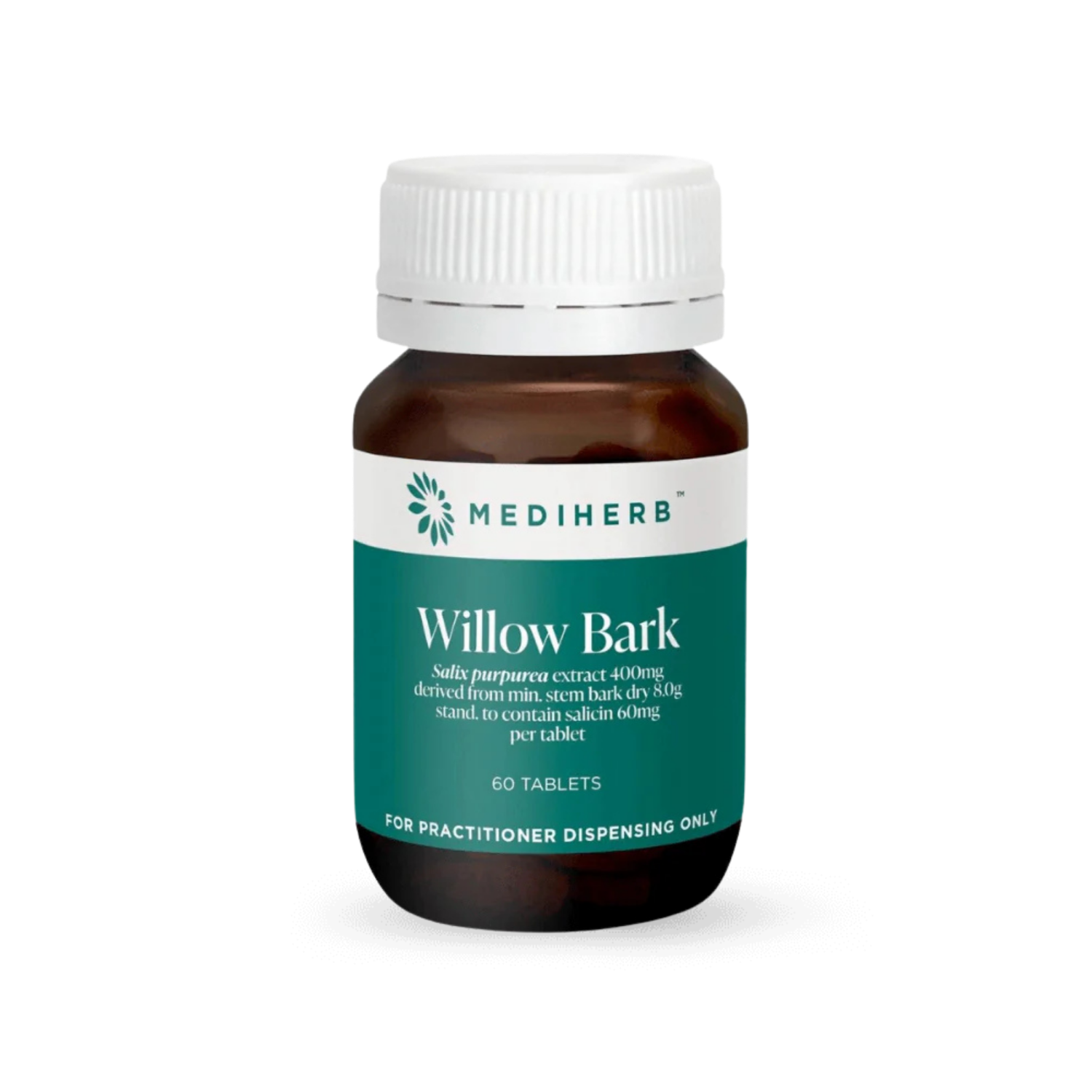
Willow Bark 60 Tablets

Regular price $109.95 AUD

Key Benefits

  • As an analgesic to relieve pain and for its anti-inflammatory properties
  • To decrease mild rheumatic aches and pains and symptoms of mild arthritis and mild osteoarthritis
  • To relieve symptoms of headaches
View full range — Mediherb

💗 Australian-owned • Independent wellness

Practitioner-grade support. Always read the label and follow the directions for use.

Join Wellness Circle

Member pricing on orders $200+ and exclusive perks

Shipping & Dispatch $19.95 flat rate · Free over $200

Australia Post — fully trackable.


  • Free shipping: $200+
  • Flat rate: $19.95 Australia-wide

Dispatch: usually within 1–3 business days

Traditional Relief for Pain and Inflammation

Willow Bark has been used traditionally in Western herbal medicine as an analgesic to relieve pain and to decrease symptoms of mild arthritis and mild osteoarthritis. 


Related Reading

Learn more in our related guide: The Role of Inflammation in Body's Harmony


  • As an analgesic to relieve pain and for its anti-inflammatory properties
  • To decrease mild rheumatic aches and pains and symptoms of mild arthritis and mild osteoarthritis
  • To relieve symptoms of headaches
  • To decrease symptoms of common colds and flu and relieve mild fever

Salix purpurea (Willow)Extract 8.0 g400 mg Salicin (standardised to 60 mg)

  • Adults: 1 - 2 tablets twice daily
  • Calcium hydrogen phosphate dihydrate
  • Croscarmellose sodium hypromellose
  • Magnesium stearate
  • Microcrystalline cellulose

No Added: Gluten, soya bean, milk, lactose, peanuts, tree nuts, fish, crustacea, corn, egg, sesame seeds, artificial colours, sweeteners or flavours.

  • Willow Bark is contraindicated in those with allergy or sensitivity to salicylates and is also contraindicated in glucose-6-phosphate dehydrogenase-deficient patients (in this condition salicylic acid causes haemolytic anaemia)
  • Use with caution during pregnancy
  • Caution is advised in patients taking warfarin
  • Discontinue 7 days prior to general anaesthesia
  • Not to be used in children under 5 years
  • If patient symptoms persist, seek additional professional advice