













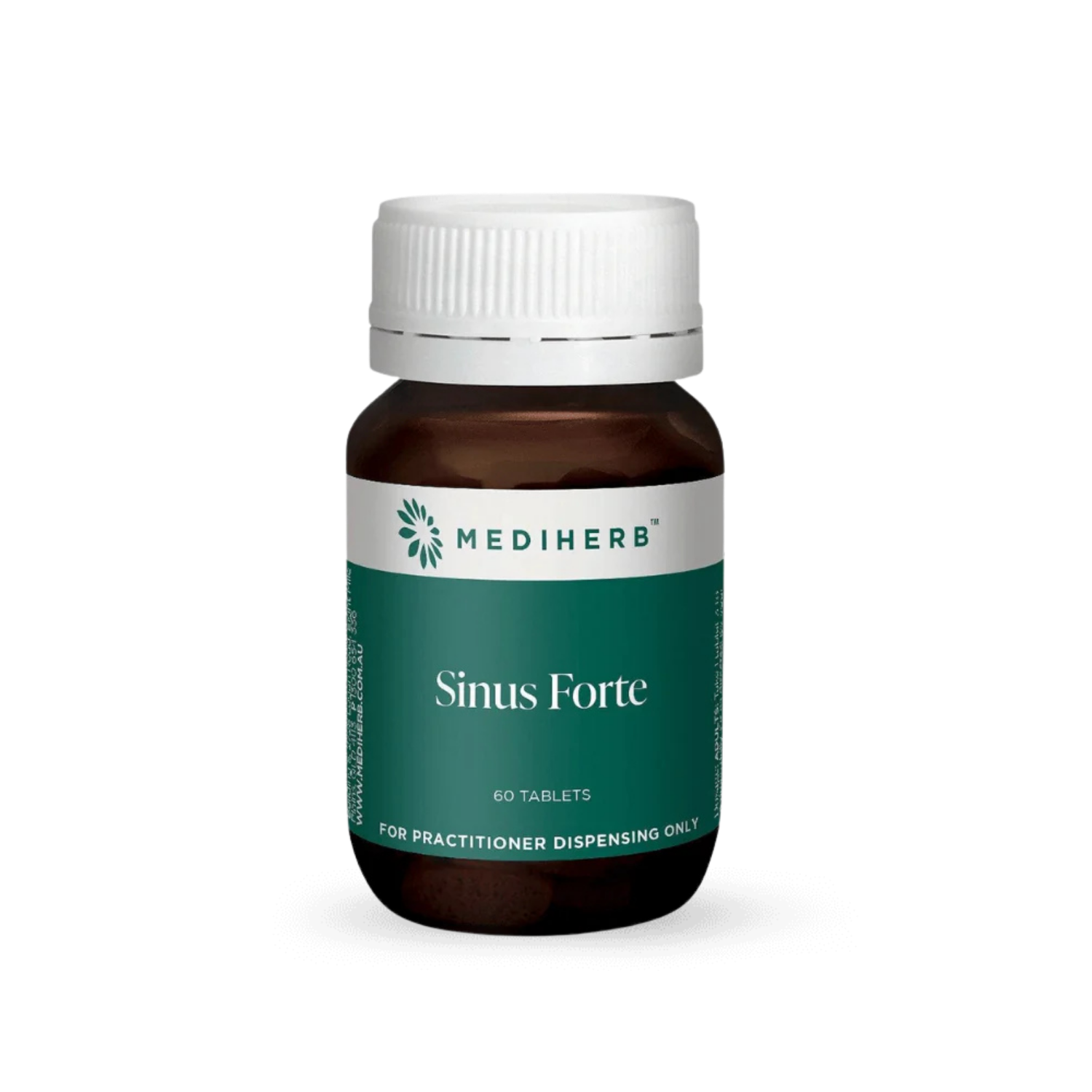
Sinus Forte 60 Tablets

Regular price $139.95 AUD

Key Benefits

  • Supports healthy sinus function
  • Relieves nasal congestion
  • Supports upper respiratory health
View full range — Mediherb

💗 Australian-owned • Independent wellness

Practitioner-grade support. Always read the label and follow the directions for use.

Join Wellness Circle

Member pricing on orders $200+ and exclusive perks

Shipping & Dispatch $19.95 flat rate · Free over $200

Australia Post — fully trackable.


  • Free shipping: $200+
  • Flat rate: $19.95 Australia-wide

Dispatch: usually within 1–3 business days

Natural Relief for Sinus Issues

Sinus Forte contains herbs traditionally used in Western herbal medicine: Eyebright to relieve symptoms of allergic rhinitis, sinusitis, and sneezing, and Echinacea purpurea root to support immune system health and relieve symptoms of mild upper respiratory tract infections.


Related Reading


Supports healthy sinus function
Relieves nasal congestion
Supports upper respiratory health
Helps ease seasonal irritation

Each tablet contains:

Euphrasia officinalis (Eyebright) herb extract 1.3 mL (derived from dry herb 650 mg); Solidago virgaurea (Golden Rod) herb extract 1.3 mL (derived from dry herb 650 mg); Echinacea purpurea (Echinacea) root extract 740 µL (derived from dry root 370 mg); Hydrastis canadensis (Golden Seal) root and rhizome extract 375 µL (derived from dry root and rhizome 125 mg); Capsicum annuum (Cayenne) fruit extract 30 µL (derived from dry fruit 10 mg).

Adults: Take 1 tablet 3-4 times daily.

Calcium hydrogen phosphate dihydrate, colloidal anhydrous silica, hypromellose, magnesium stearate, microcrystalline cellulose, sodium starch glycollate.

  • No added: Gluten, soya bean, milk, lactose, peanuts, tree nuts, fish, crustacea, egg, sesame seeds, artificial sweeteners, colours, or flavours.
  • Suitable for vegans and vegetarians.
  • Not to be used in children under two years of age without medical advice.
  • Use with caution during pregnancy.
  • The risk of allergic reaction to Echinacea is minimal, especially if root preparations are used since these are free of pollens.
  • Echinacea is contraindicated for long-term use in patients taking immunosuppressant medication (e.g., transplant patients) - short-term therapy only is suggested in this instance.
  • Caution is advised in patients receiving midazolam by injection.
  • Caution in those taking theophylline as Cayenne may increase its absorption and bioavailability.
  • Discontinue 7 days prior to general anaesthesia.
  • If patient symptoms persist, seek additional professional advice.