














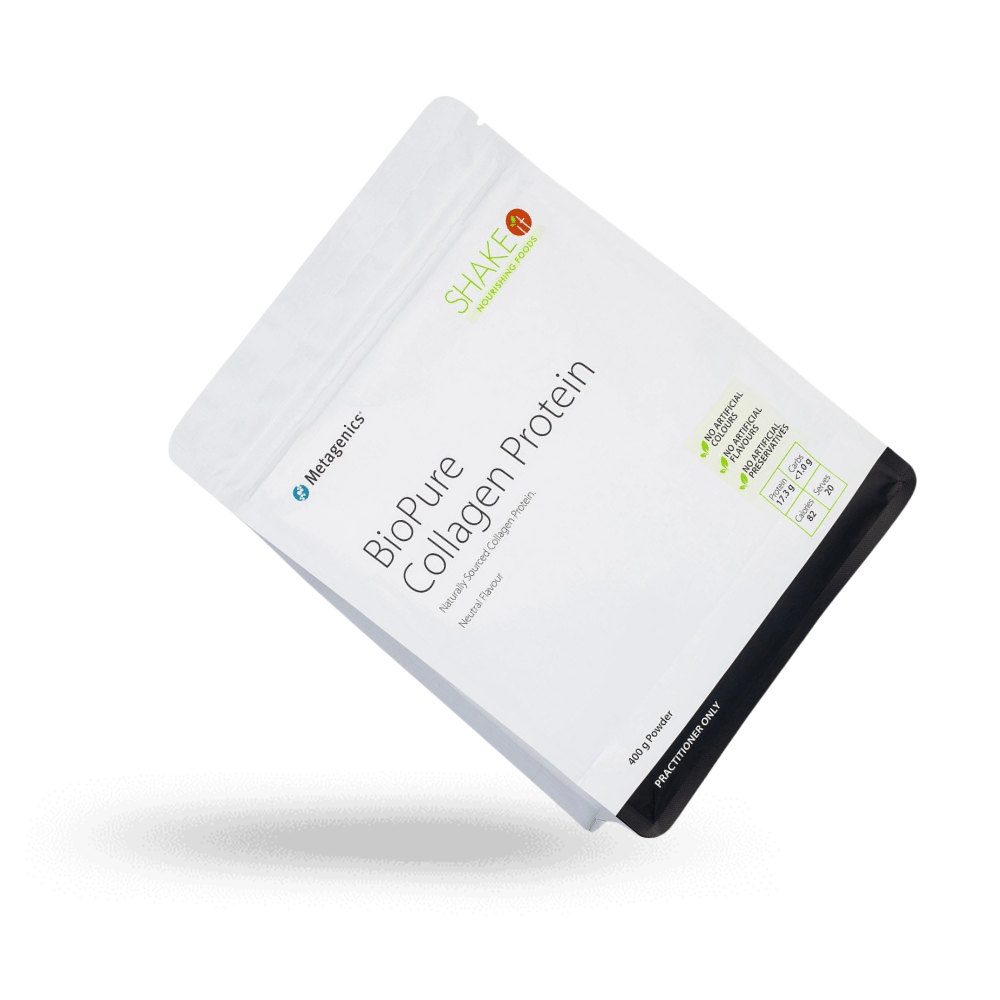
BioPure Collagen Protein 400g

Regular price $149.95 AUD

Key Benefits

  • Pure collagen protein to support daily protein intake
  • Supports joints, skin & connective tissue
  • Easy to digest, neutral flavour powder
View full range — Metagenics

Australian-owned • Independent wellness

Practitioner-grade support. Always read the label and follow the directions for use.

Shipping & Dispatch $19.95 flat rate · Free over $199

Australia Post — fully trackable.


  • Free shipping: $199+
  • Flat rate: $19.95 Australia-wide

Dispatch: usually within 1–3 business days

Naturally Sourced Collagen Protein.

Nutritional protein supplement providing collagen peptides rich in hydroxyproline and Type I and Type III collagen

Pure collagen protein to support daily protein intake

Supports joints, skin & connective tissue
Easy to digest, neutral flavour powder

  • Low carbohydrate, low reactive and low-allergenic protein source for satiety
  • Free from dairy protein, lactose, eggs, gluten, wheat, nuts, yeast, soy protein, and salt
  • Free from artificial colours, flavours, and preservatives
  • Contains natural and identical nature flavours
  • Neutral flavour

Ingredients

Collagen peptides (95.26%), natural and identical nature flavours, and steviol glycosides.

Nutritional Information

Energy (341 kJ / 82 Cal per 20 g serving; 1707 kJ / 408 Cal per 100 g), Protein (17.3 g; 86.5 g), Total fat (<1.0 g; <1.0 g) including saturated (<1.0 g; <1.0 g), monounsaturated (<1.0 g; <1.0 g), polyunsaturated (<1.0 g; <1.0 g) and trans fat (<0.1 g; <0.1 g), Carbohydrates (<1.0 g; 1.1 g) including sugars (<1.0 g; 1.1 g), Sodium (75.4 mg; 377 mg), Potassium (<5.0 mg; 2.4 mg).

Amino Acids

Alanine (1.65 g), Arginine (1.51 g), Aspartic acid (0.88 g), Cysteine (0 g), Glutamic acid/Glutamine (1.97 g), Glycine (4.58 g), Histidine (0.18 g), Hydroxylysine (0.29 g), Hydroxyproline (2.42 g), Isoleucine (0.24 g), Leucine* (0.51 g), Lysine* (0.65 g), Methionine* (0.18 g), Phenylalanine* (not specified).**

*Essential amino acids

  • 2 metric tablespoons (20 g) in your choice of beverage or food
  • Allow collagen to dissolve for 30 seconds

Corn Maltodextrin, Glucose syrup powder (from potato), Pea dextrin, and Tapioca maltodextrin.

Free from dairy protein, lactose, eggs, gluten, wheat, nuts, yeast, soy protein, and salt. Free from artificial colours, flavours, and preservatives.

  • Always read the label
  • If symptoms persist, consult your healthcare professional
  • Dietary supplements should not replace a balanced diet
Collagen FAQsCommon questions about collagen supplements
What is collagen?

Collagen is a structural protein found in the body, including the skin, bones, cartilage, tendons, ligaments and connective tissue. Collagen supplements usually provide collagen peptides or hydrolysed collagen, which are broken-down forms designed for easier digestion and absorption.

What do collagen supplements help support?

Collagen supplements are commonly used to support skin elasticity, skin hydration, hair and nail health, joint comfort, connective tissue health and general protein intake. The exact purpose depends on the collagen type, dose, source and full product formula.

What are collagen peptides?

Collagen peptides are smaller pieces of collagen that have been broken down from larger collagen proteins. They are commonly used in powders, capsules, tablets and drinks because they are easier for the body to digest than whole collagen.

What does hydrolysed collagen mean?

Hydrolysed collagen means the collagen has been broken down into smaller peptides through a process called hydrolysis. This makes the collagen easier to mix, digest and absorb compared with whole collagen protein.

What is the difference between marine collagen and bovine collagen?

Marine collagen is usually sourced from fish, while bovine collagen is sourced from cattle. Marine collagen is often positioned for skin, hair and beauty support, while bovine collagen may be used for skin, joint and general connective tissue support. The better option depends on the product, source, dose, allergens and personal preference.

What is type I collagen?

Type I collagen is one of the main collagen types found in skin, tendons, ligaments and bone. Many marine and bovine collagen products provide type I collagen or collagen peptides that support general connective tissue and skin-focused formulas.

What is type II collagen?

Type II collagen is commonly associated with cartilage and joint-support formulas. Some products use undenatured type II collagen, while others use hydrolysed collagen peptides. These are not the same, so check the label carefully when comparing joint products.

How do I choose the right collagen product?

Look at the collagen source, collagen type, grams per serve, added nutrients, flavour, sweeteners, allergens, serving size and whether the product is designed for skin, joints, hair, nails, sports recovery or general protein support. The right product depends on your goals, diet and tolerance.

Is higher-dose collagen better?

Not always. Some collagen powders provide several grams per serve, while capsules usually provide smaller amounts. A higher amount may suit some people, but the best choice depends on the product purpose, serving size, consistency of use and whether the formula includes other supporting nutrients.

Does collagen replace protein powder?

No. Collagen is a protein source, but it is not a complete protein in the same way as many whey, plant or complete amino acid protein powders. Collagen may support specific connective tissue or skin-focused goals, but it should not be relied on as the only protein source in the diet.

Does vitamin C matter with collagen?

Vitamin C is involved in normal collagen formation in the body. Some collagen products include vitamin C, while others are plain collagen powders. Check the full formula before adding extra vitamin C, especially if you already take a multivitamin or skin-support product.

Can collagen support skin health?

Collagen products are commonly used for skin hydration, elasticity and ageing-support routines. Results can vary, and skin health is also influenced by sun exposure, smoking, diet, hydration, sleep, hormones, skincare and overall health.

Can collagen support hair and nails?

Collagen products are often marketed for hair and nail support, but results can vary. Hair and nail concerns may also relate to iron, zinc, thyroid function, protein intake, stress, hormones or other factors, so persistent changes should be assessed properly.

Can collagen support joints?

Some collagen products are used in joint and connective tissue support formulas. Joint discomfort can have many causes, including injury, inflammation, arthritis, training load or age-related changes. Persistent, severe or unexplained joint symptoms should be discussed with a qualified health professional.

When is the best time to take collagen?

Timing depends on the product and your routine. Collagen powders are often mixed into drinks, smoothies, coffee or food, while capsules are taken according to the label directions. Consistency matters more than chasing a perfect time of day.

Can collagen cause side effects?

Collagen is generally well tolerated by many people, but some may experience digestive discomfort, bloating, nausea, reflux, aftertaste or changes in bowel habits. If symptoms are severe, persistent or unusual, stop use and seek professional advice.

Can collagen trigger allergies?

Yes, depending on the source. Marine collagen may not suit people with fish or seafood allergy, while bovine collagen may not suit people avoiding beef-derived ingredients. Always check the source, allergen statement and capsule or flavour ingredients before use.

Is collagen suitable during pregnancy or breastfeeding?

Collagen supplement suitability during pregnancy or breastfeeding should be checked with a doctor, midwife, pharmacist or qualified health professional. Pregnancy and breastfeeding are times when supplement use should be personalised, especially where added herbs, vitamins, minerals or sweeteners are included.

Can children take collagen supplements?

Collagen is often combined with vitamin C, zinc, hyaluronic acid, silica, biotin, antioxidants, protein powders or joint-support formulas. Check the full ingredient panels before combining products so you do not double up unnecessarily.


Who should be cautious with collagen supplements?

People who are pregnant, breastfeeding, shopping for a child, managing kidney disease, gout, protein restrictions, allergies, digestive sensitivity, diagnosed medical conditions or medication use should seek professional advice before using collagen supplements.

Is this information a replacement for medical advice?

No. This information is general only and does not replace personalised medical advice. If you are pregnant, breastfeeding, taking medication, shopping for a child, managing a diagnosed condition, have allergies, or unsure whether collagen is suitable for you, speak with a qualified health professional before use.