













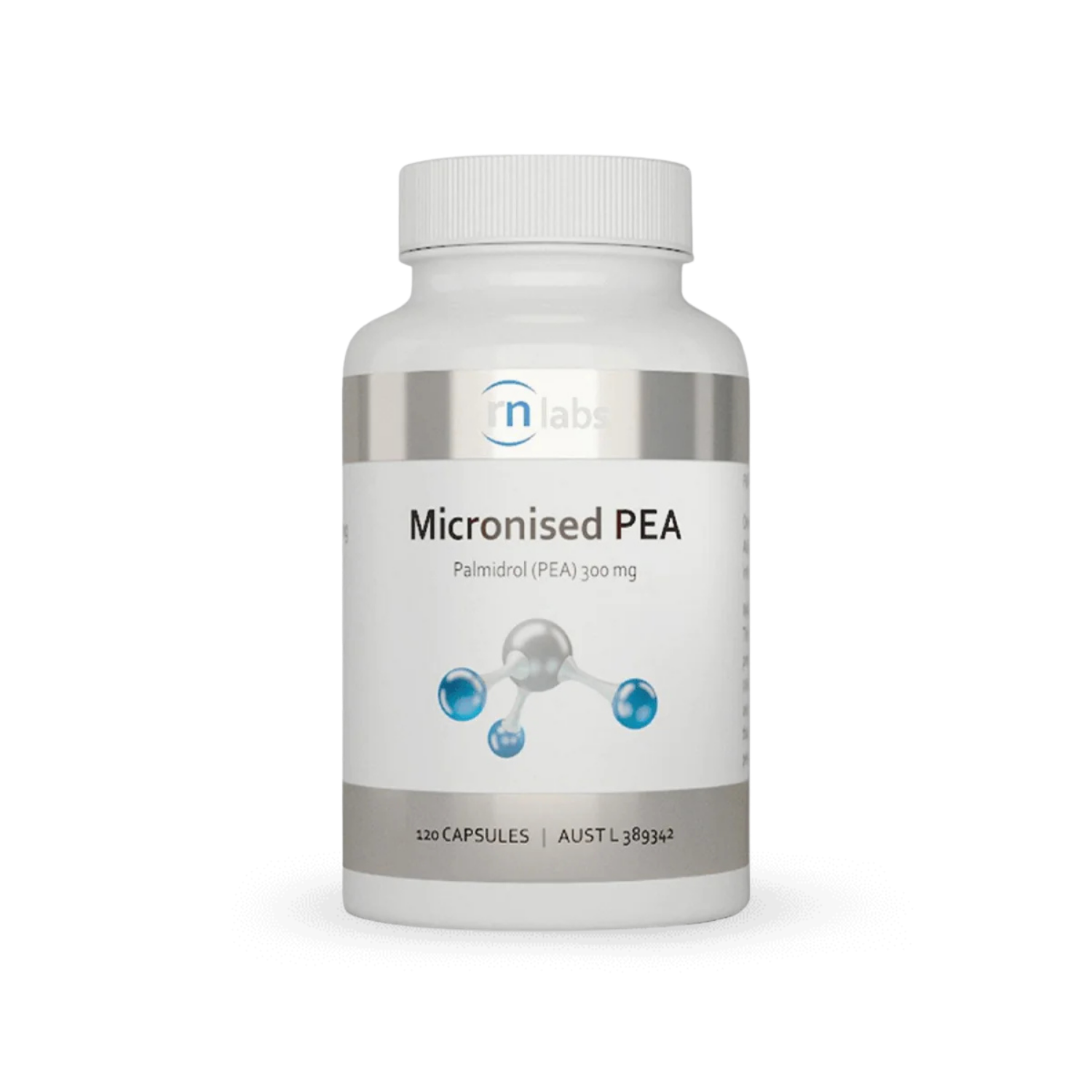
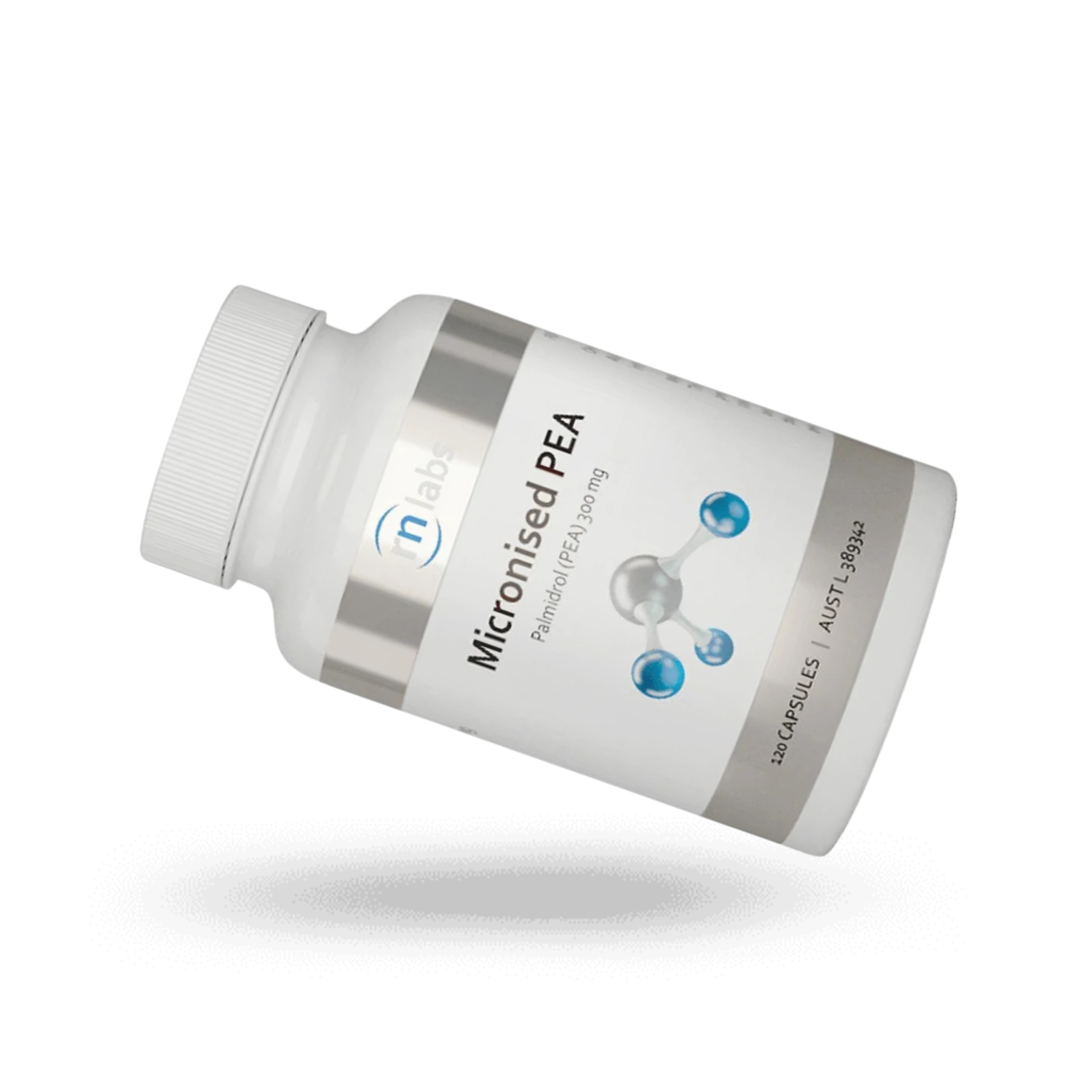
Micronised PEA 120 Capsules

Regular price $139.95 AUD

Key Benefits

  • Pain modulation support
  • Inflammation support
  • Nerve health support
View full range — RN Labs

💗 Australian-owned • Independent wellness

Practitioner-grade support. Always read the label and follow the directions for use.

Shipping & Dispatch $19.95 flat rate · Free over $200

Australia Post — fully trackable.


  • Free shipping: $200+
  • Flat rate: $19.95 Australia-wide

Dispatch: usually within 1–3 business days

Nature's Pathway to Comfort

Harness the innate power of Palmitoylethanolamide (PEA) with our precision-formulated capsules. This naturally occurring fatty acid amide has gained traction in the scientific community for its impressive ability to support and modulate the body's pain pathways. Each of our capsules delivers a targeted 300mg dose, positioning it as a valuable companion for those in search of enhanced comfort and well-being. 

Pain modulation support

Inflammation support

Nerve health support

  • Targeted Dosing: Each capsule consistently delivers a 300mg dose of pure Palmitoylethanolamide (PEA) for maximum benefits.
  • Naturally Derived: Sourced from quality ingredients, ensuring a natural and effective product.
  • Vegan & Gluten-Free: Thoughtfully crafted to cater to diverse dietary needs and preferences.
  • Non-GMO: Manufactured without genetically modified organisms, safeguarding nature's integrity.


Palmitoylethanolamide (PEA) 300 mg


For adults, take one capsule daily or as recommended by a healthcare professional.

  • Adults only
  • Not to be used for more than 21 consecutive days
  • Safety has not been confirmed during pregnancy & lactation
  • May interact with other prescription analgesic medicines; please consult your healthcare practitioner before use
  • Always read the label
  • Dietary supplements should not replace a balanced diet
  • If symptoms persist, worsen or change unexpectedly, consult your healthcare professional
PEA FAQsCommon questions about PEA supplements
What is PEA?

PEA stands for palmitoylethanolamide. It is a naturally occurring fatty acid compound found in the body and in some foods. In supplements, PEA is commonly used in pain support, nerve comfort, inflammatory-balance and practitioner-style formulas.

Is PEA the same as pea protein?

No. PEA, or palmitoylethanolamide, is not the same as pea protein. Pea protein is a plant protein made from peas, while PEA is a fatty acid compound used in targeted supplement formulas.

What does PEA help support?

PEA supplements are commonly used to support inflammatory balance, nerve comfort, pain-management routines, joint comfort and general wellbeing. The exact purpose depends on the product, dose, delivery form and whether it is used alone or in a broader formula.

How do I choose the right PEA supplement?

Look at the amount of PEA per serve, whether the product uses micronised or ultra-micronised PEA, dose directions, added ingredients, capsule count and whether the formula is designed for nerve support, joint support, pain support or practitioner-guided use.

What is micronised PEA?

Micronised PEA refers to PEA that has been processed into smaller particle sizes. This is commonly used to support dispersion and absorption. Some products may use micronised or ultra-micronised forms, so check the label carefully when comparing formulas.

What is ultra-micronised PEA?

Ultra-micronised PEA is a smaller-particle form of PEA used in some specialised formulas. It is often positioned for improved availability compared with standard PEA. The best option depends on the product quality, dose, tolerance and intended use.

Can PEA support nerve comfort?

PEA is commonly used in nerve-comfort and neuropathic-support formulas. Nerve symptoms such as burning, tingling, numbness, weakness or persistent pain should be assessed by a qualified health professional rather than managed only with supplements.

Can PEA support joint comfort?

PEA may be included in formulas aimed at joint comfort, mobility and inflammatory balance. Joint pain can have many causes, including injury, arthritis, inflammation, training load or medical conditions, so persistent, severe or unexplained symptoms should be checked professionally.

Can PEA support inflammatory balance?

PEA is commonly used in inflammatory-balance formulas. It should not be seen as a replacement for medical care, especially where pain, swelling, injury, autoimmune disease, infection or diagnosed inflammatory conditions are involved.

How long does PEA take to work?

PEA is usually not an instant-acting supplement. Some people may use it consistently for several weeks before deciding whether it suits them. Always follow the product label and seek professional advice if pain or discomfort is ongoing, severe or worsening.

When is the best time to take PEA?

Timing depends on the product and your tolerance. Some PEA products are taken with meals, while others may have specific label directions. Always follow the product label and avoid taking more than directed.

Can PEA cause side effects?

PEA is generally well tolerated by many people, but some may experience digestive discomfort, nausea, headache, tiredness, skin reactions or changes in how they feel. If symptoms are severe, persistent or unusual, stop use and seek professional advice.

Can I take PEA with pain medication?

Use caution. PEA may be used by some people alongside pain-management routines, but it should not replace prescribed medication or medical advice. If you take pain medicines, anti-inflammatory medicines, nerve-pain medicines or regular prescriptions, ask your doctor or pharmacist before use.

Can I take PEA with other joint or nerve supplements?

PEA is often combined with ingredients such as curcumin, boswellia, magnesium, B vitamins, alpha-lipoic acid, omega-3, collagen or other joint and nerve-support nutrients. Check the full ingredient panels before combining products to avoid unnecessary duplication.

Can I take more than one PEA product at the same time?

Use caution when combining PEA products. Pain-support formulas, nerve-support formulas, practitioner products and joint formulas may all contain PEA. Taking several together can increase your total intake unnecessarily.

Is PEA suitable during pregnancy or breastfeeding?

PEA supplement suitability during pregnancy or breastfeeding should be checked with a doctor, midwife, pharmacist or qualified health professional. Pregnancy and breastfeeding are times when supplement use should be personalised, especially with targeted or practitioner-style products.

Can children take PEA supplements?

Children should only use PEA products that clearly state age suitability and are appropriate for their needs. For young children, children with pain, nerve symptoms, diagnosed conditions or medication use, seek professional advice first.

Who should be cautious with PEA supplements?

People who are pregnant, breastfeeding, taking medication, managing chronic pain, nerve symptoms, autoimmune disease, inflammatory conditions, liver or kidney disease, diagnosed medical conditions, or shopping for a child should seek professional advice before using PEA.

Is this information a replacement for medical advice?

No. This information is general only and does not replace personalised medical advice. If you are pregnant, breastfeeding, taking medication, shopping for a child, managing pain, nerve symptoms, inflammation or a diagnosed condition, speak with a qualified health professional before use.