















BabyBiotic 0+yrs Powder

Regular price $69.95 AUD

Key Benefits

  • Supports healthy infant gut microbiome
  • Helps maintain digestive health
  • Supports immune system development
View full range — BioCeuticals

Treatment Supply

💗 Australian-owned • Independent wellness

Practitioner-grade support. Always read the label and follow the directions for use.

Join Wellness Circle

For customers who choose quality over shortcuts. Benefits apply $200+. T&Cs apply.

Shipping & Dispatch $19.95 flat rate · Free over $200

Australia Post — fully trackable.


  • Free shipping: $200+
  • Flat rate: $19.95 Australia-wide

Dispatch: usually within 1–3 business days

Probiotic Support for Infants and Children

BabyBiotic 0+yrs® is a dairy-free probiotic powder specifically designed to nurture healthy gastrointestinal microflora in neonates, infants, and children. BabyBiotic 0+yrs® combines multiple strains of probiotics, including Bifidobacterium breve (M-16V), B. infantis (M63), and B. animalis ssp. lactis (CUL34) and more—some of the most common probiotic strains present in the gastrointestinal tract (GIT) of healthy breastfed newborns and infants. 


Supports healthy infant gut microbiome

Helps maintain digestive health
Supports immune system development
Assists gastrointestinal balance
Helps maintain healthy intestinal flora

  • Provides probiotic strains commonly found in breastfed infants.
  • BabyBiotic 0+yrs® is a symbiotic formula that combines probiotic bifidobacteria and lactobacilli strains with prebiotic fiber inulin.
  • Probiotics are live microorganisms that provide a health benefit when taken in adequate amounts.
  • Inulin is classified as a prebiotic and is found in many fruits and vegetables.

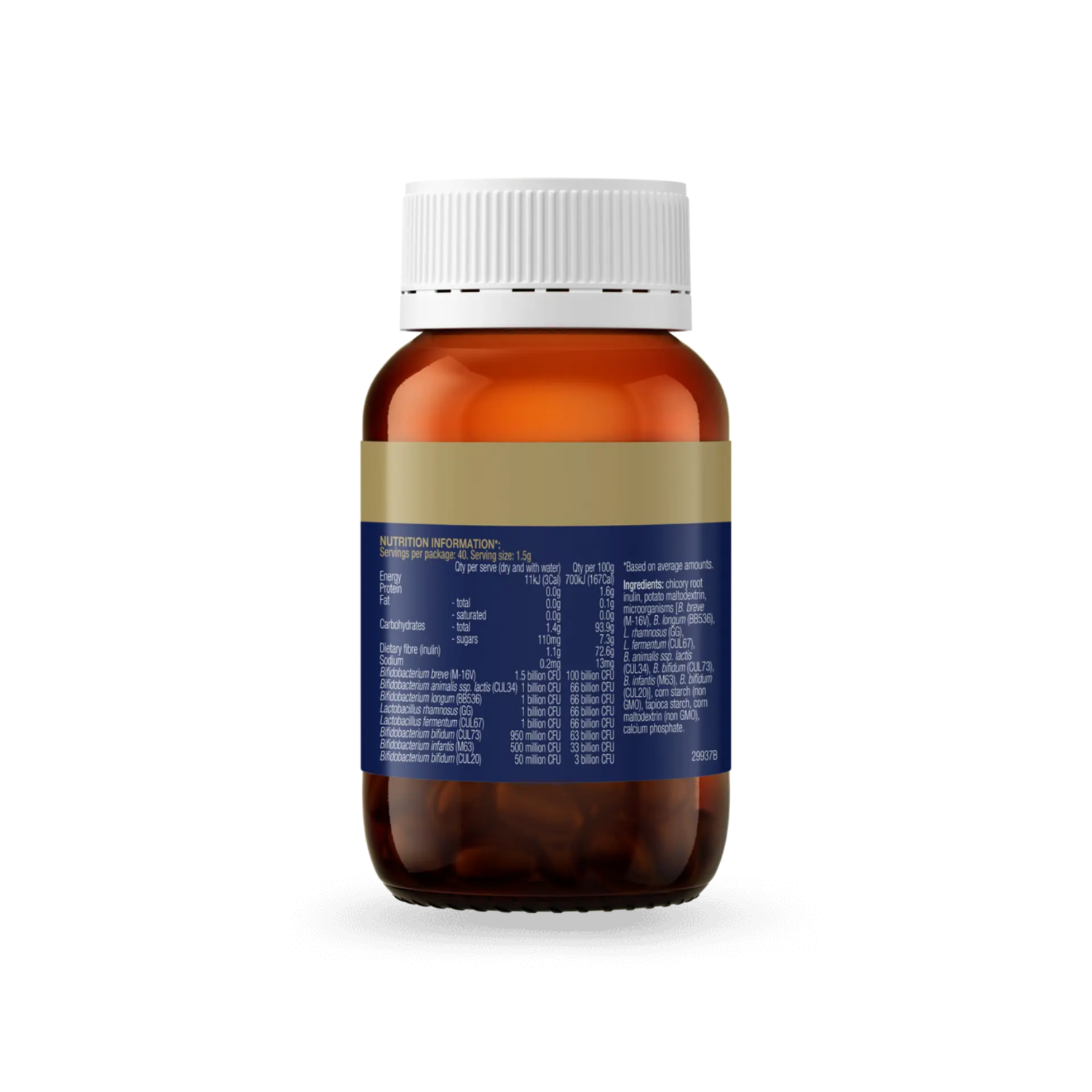
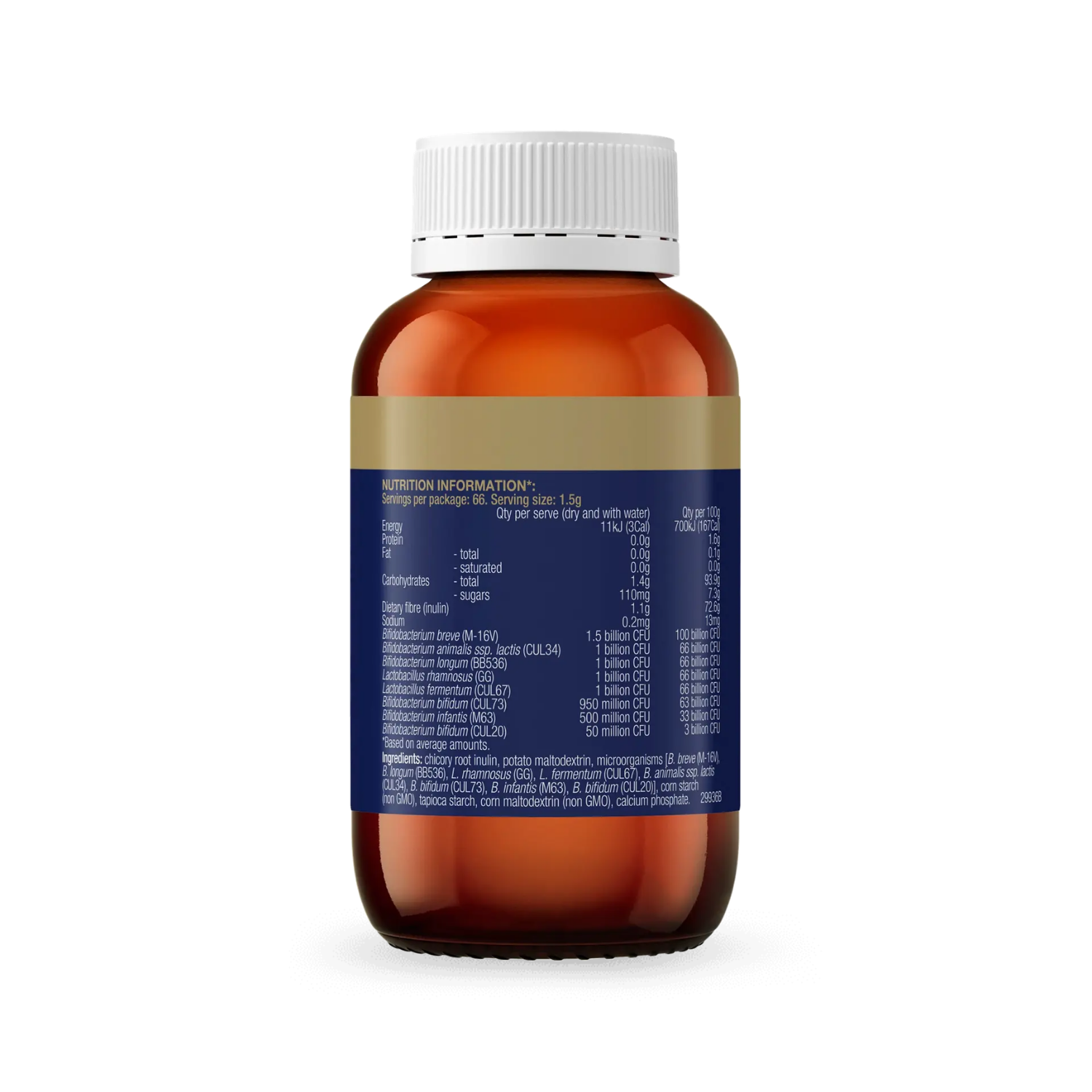
Nutritional Information* Serving size: 1.5g Qty per serve (dry and with water) Qty per 100g Energy 11kJ (3Cal) 700kj (167Cal) Protein 0.0g 1.6g Fat (total) 0.0g 0.1g Fat (saturated) 0.0g 0.0g Carbohydrate (total) 1.4g 93.9g Carbohydrate (sugars) 109mg 7.3g Dietary fibre (inulin) 1.1g 72.6g Sodium 0.2mg 13mg Bifidobacterium breve (M-16V) 1.5 billion CFU 100 billion CFU Bifidobacterium animalis ssp. lactis (CUL 34) 1 billion CFU 66 billion CFU Bifidobacterium longum (BB536) 1 billion CFU 66 billion CFU Lactobacillus rhamnosus (GG) 1 billion CFU 66 billion CFU Lactobacillus fermentum (CUL 67) 1 billion CFU 66 billion CFU Bifidobacterium bifidum (CUL 73) 950 million CFU 63 billion CFU Bifidobacterium infantis (M63) 500 million CFU 33 billion CFU Bifidobacterium bifidum (CUL 20) 50 million CFU 50 million CFU *Based on average amounts. Ingredients: chicory root inulin, potato maltodextrin, microorganisms [B. breve (M-16V), B. longum (BB536), L. rhamnosus (GG), L. fermentum (CUL67), B. animalis ssp. lactis (CUL34), B. bifidum (CUL73), B. infantis (M63), B. bifidum (CUL20)], corn starch (non GMO), tapioca starch, corn maltodextrin (non GMO), calcium phosphate.

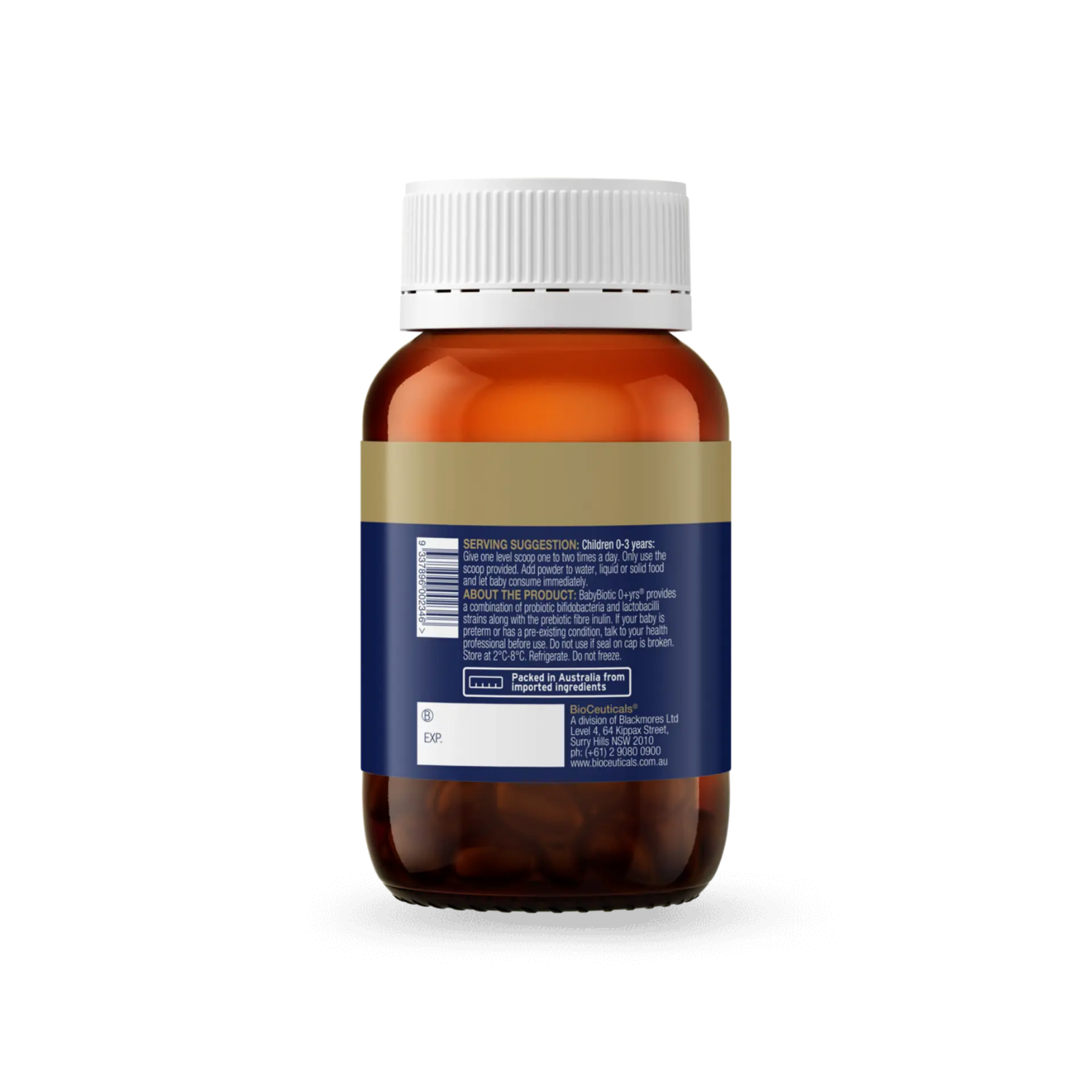
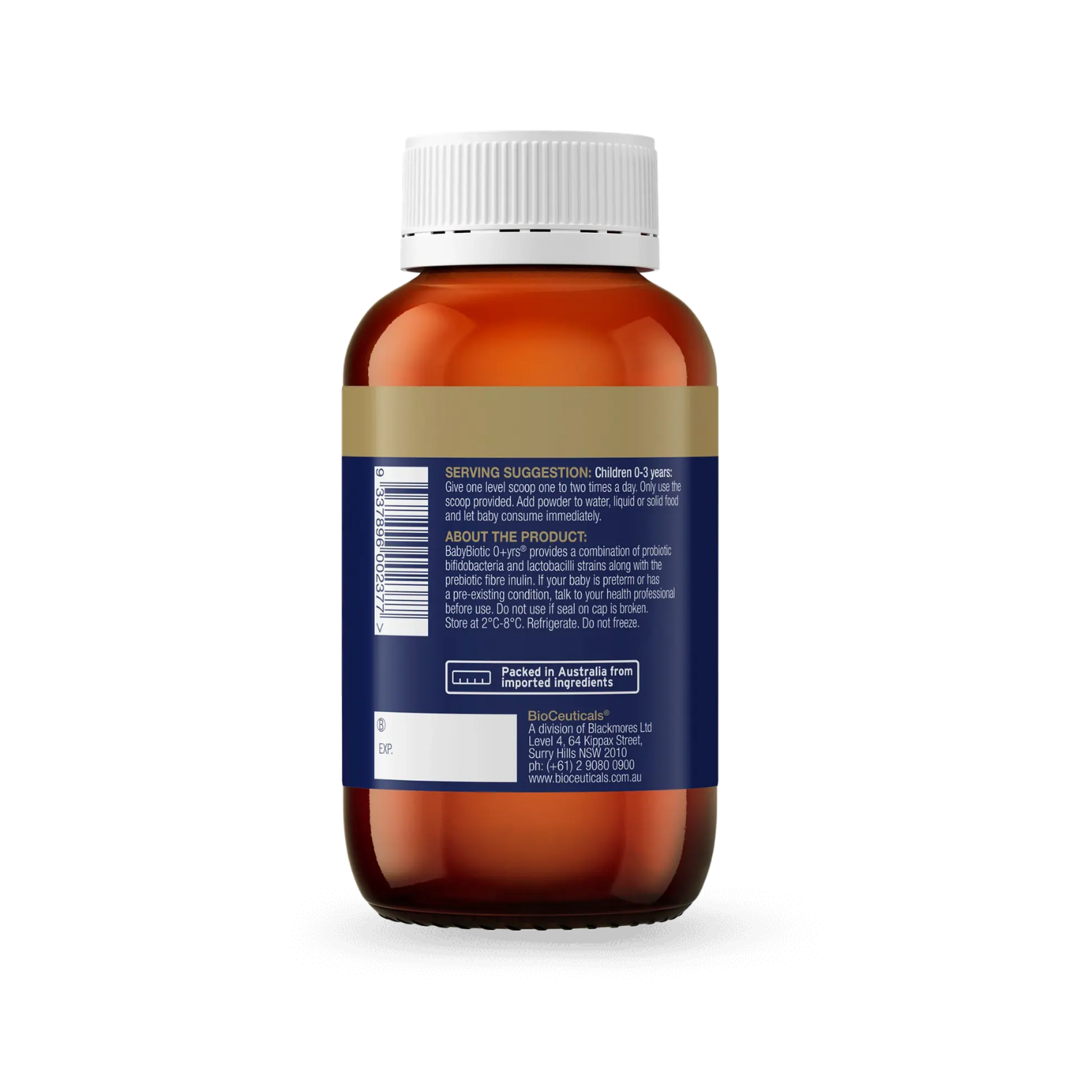
Children 0-3 years: Give one heaped scoop (1.5g of powder) one to two times a day. Add powder to water, liquid or solid food and let baby consume immediately.

Contains chicory root inulin, potato maltodextrin, corn starch, tapioca starch, corn maltodextrin and calcium phosphate.

Dairy free


Gluten free


Vegan friendly

Always read the label & use only as directed. Vitamin supplements should not replace a balanced diet. If symptoms persist consult your healthcare practitioner.

Store refrigerated at 2 °C – 8 °C. Do not freeze.

Probiotics FAQsCommon questions about probiotics
What are probiotics?

Probiotics are live microorganisms, usually beneficial bacteria or yeasts, that are used to support gut health and microbial balance. They may be found in supplements, fermented foods and some functional health products. The effect of a probiotic can depend on the strain, dose, formula and individual person.

How do I choose the right probiotic?

Start by looking at the strain or strains used, the CFU amount, storage instructions, age suitability, and whether the product is designed for general gut support, antibiotic use, children, women’s health, travel, bloating or immune support. The best probiotic is not always the highest CFU product — it is the one that best matches your needs and tolerance.

What does CFU mean?

CFU stands for colony forming units. It refers to the number of live microorganisms provided by the product. A higher CFU count does not automatically mean a better product, because the strain, formula quality, storage stability and intended use also matter.

Do different probiotic strains do different things?

Yes. Different probiotic strains may be used for different purposes. For example, some formulas are designed for general digestive support, while others may focus on antibiotic-associated digestive balance, women’s health, children’s gut support or immune support. Always check the product label and intended use.

Should probiotics be taken with antibiotics?

Some people use probiotics during or after a course of antibiotics to support gut microbial balance. If taking antibiotics, ask your doctor or pharmacist whether a probiotic is suitable and how far apart to take it from your medication. Always follow the product label and professional advice.

When is the best time to take probiotics?

Timing depends on the product. Some probiotics are taken with food, while others may be taken away from meals. Follow the directions on the label, as different probiotic strains and delivery systems may have different instructions.

Do probiotics need to be refrigerated?

Some probiotics require refrigeration, while others are shelf-stable. Always follow the storage instructions on the product label. If a probiotic says to refrigerate after opening or store below a certain temperature, those directions should be followed to help maintain product quality.

Are shelf-stable probiotics still effective?

Shelf-stable probiotics can still be suitable when they are specifically formulated and tested for stability. The key is to follow the label directions, check the expiry date, avoid excess heat, and store the product as recommended by the manufacturer.

Can probiotics cause bloating or digestive changes?

Some people may notice temporary digestive changes such as bloating, gas or changes in bowel habits when starting a probiotic. This can vary depending on the person and formula. If symptoms are severe, persistent or unusual, stop use and seek professional advice.

Can children take probiotics?

Some probiotics are specifically formulated for children, but not every probiotic is suitable for every age group. Use products that clearly state children’s suitability and follow the label directions. For infants, young children, premature babies or children with medical conditions, seek advice from a qualified health professional first.

Are probiotics suitable during pregnancy or breastfeeding?

Some probiotic products may be suitable during pregnancy or breastfeeding, but suitability depends on the strain, dose, formula and individual circumstances. Speak with your doctor, midwife, pharmacist or qualified health professional before use during pregnancy or breastfeeding.

Who should be cautious with probiotics?

People who are seriously unwell, immune-compromised, taking immune-suppressing medicines, pregnant, breastfeeding, caring for an infant, or managing a diagnosed medical condition should seek professional advice before using probiotics. Probiotics are generally well tolerated by many people, but they may not be suitable for everyone.

Can I take more than one probiotic at the same time?

Use caution when combining probiotic products. Taking multiple probiotics may double up on strains, increase total CFU intake, or cause digestive discomfort in some people. If using more than one gut health product, check the labels carefully and seek professional guidance if unsure.

What is the difference between probiotics and prebiotics?

Probiotics are live microorganisms. Prebiotics are fibres or compounds that help feed beneficial gut bacteria. Some products contain both and may be called synbiotics. If you are sensitive to fibre, prebiotic-containing formulas may feel different from probiotic-only products.

Is this information a replacement for medical advice?

No. This information is general only and does not replace personalised medical advice. If you are pregnant, breastfeeding, taking medication, immune-compromised, shopping for a child, managing digestive symptoms or unsure which probiotic suits you, speak with a qualified health professional before use.