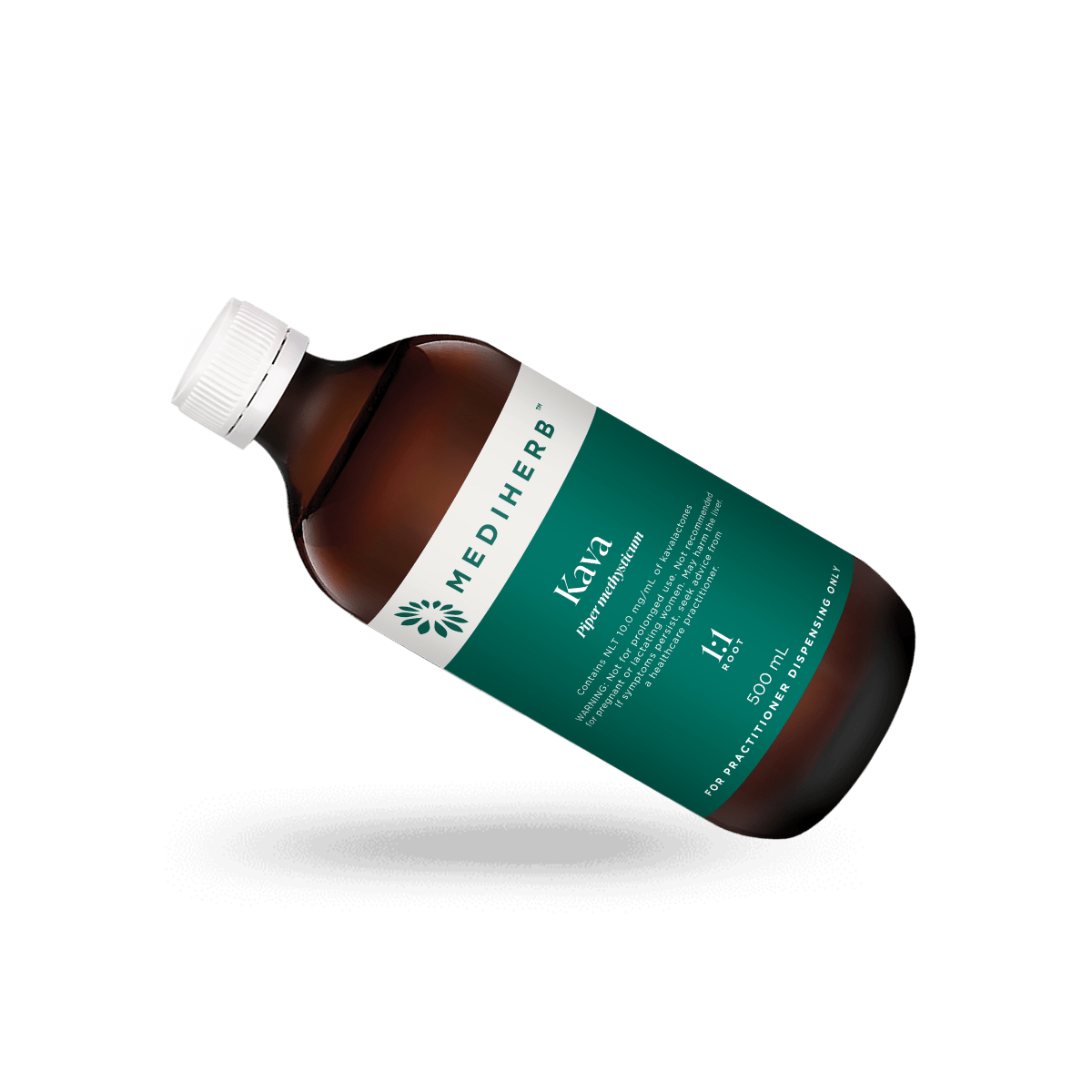
For practitioner dispensing and professionally guided use.
Always read the label and follow the directions for use.
Do not use if you currently have liver disease, previous liver damage, abnormal liver-function results or a history of unexplained liver problems.
Kava-containing medicines have been associated with rare but potentially serious liver injury. The TGA advises people with factors that increase their risk of liver damage to avoid Kava-containing medicines.
Stop taking Kava immediately and seek medical advice for yellowing of the skin or eyes, dark urine, pale stools, persistent itching, unusual fatigue, nausea, vomiting, loss of appetite or upper abdominal pain.
Do not dismiss these symptoms as a detox reaction.
Do not drink alcohol while using Kava. Alcohol and Kava can both cause drowsiness, affect coordination and increase the risk of harmful or unpredictable effects.
Consult your doctor or pharmacist before use if you take prescription or non-prescription medicines.
Professional review is particularly important with sleeping tablets, benzodiazepines, opioid pain medicines, sedating antihistamines, anticonvulsants, antipsychotics, antidepressants, anaesthetic medicines or other central nervous system depressants.
Combining Kava with central nervous system depressants may increase sedation, muscle weakness, impaired reflexes and reduced coordination.
Consult your treating doctor before use if you have Parkinson’s disease or take levodopa or another medicine used to manage Parkinson’s symptoms. The current product page advises caution because Kava may have dopamine-antagonist activity.
Older adults may be more sensitive to drowsiness, dizziness, weakness, impaired balance or medicine interactions and require individual assessment.
Do not use during pregnancy.
Do not use while breastfeeding.
Kava is not recommended during pregnancy or breastfeeding, and some evidence indicates that Kava constituents may pass into breast milk.
Do not give this practitioner extract to a child or adolescent unless specifically prescribed with an age-appropriate dosage.
Do not use for prolonged periods. The treatment duration should be determined and reviewed by the prescribing practitioner rather than continued indefinitely.
Possible adverse effects include drowsiness, dizziness, nausea, reduced coordination, muscle weakness, fatigue and numbness around the mouth or throat. Regular or excessive use may also be associated with dry skin and other adverse effects.
Do not use Kava as a substitute for prescribed mental-health treatment, sleep medicine, counselling or medical assessment.
Persistent anxiety, panic attacks, severe low mood, major changes in behaviour or sleep problems affecting daily function require professional care.
Discontinue use at least seven days before general anaesthesia, surgery or an invasive procedure unless otherwise directed by your treating healthcare professional.
Tell your doctor, surgeon and anaesthetist that you use Kava.
Keep out of reach of children.






















 Australian-owned • Independent wellness


